

- PM Pushes Plans for Second Padma, Jamuna Bridges, Barrage |
- Tap grants, local finance; shun loans for energy sovereignty |
- Govt eyes 3,000-4,000MW solar power addition to grid before next summer: PM |
- Dhaka Ranks Fifth Among World’s Most Polluted Cities on Tuesday |
- Protests Disrupt Production at 681 Factories Across Bangladesh |
CSOs Urge Stronger Climate Action and Finance Ahead of COP31
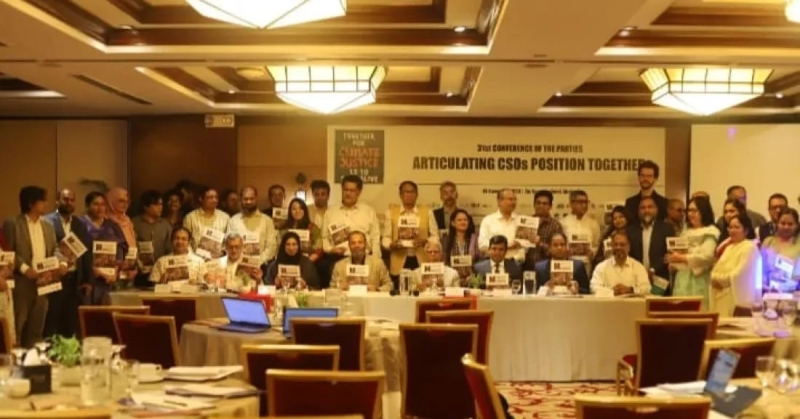
Civil society organisations (CSOs) on Tuesday called for equitable climate action, accessible climate finance and stronger global commitments ahead of the 31st Conference of the Parties (COP31), urging world leaders to move beyond political pledges and deliver tangible results.
The call came at a national seminar titled “31st Conference of the Parties: Articulating CSOs’ Positions Together”, organised by the Center for Participatory Research and Development (CPRD) in collaboration with the Climate Justice Alliance–Bangladesh (CJA-B) at a hotel in Dhaka.
The seminar brought together policymakers, climate negotiators, researchers, civil society representatives, young people, media professionals and representatives of climate-vulnerable communities to discuss Bangladesh’s priorities for COP31 and strengthen coordination between the government and civil society.
Participants also presented a civil society position paper prepared by CPRD and CJA-B member organisations, outlining key demands for climate negotiations and the implementation of global climate commitments.
The priorities include aligning the third cycle of Nationally Determined Contributions (NDCs) with the 1.5°C temperature goal, accelerating the implementation of National Adaptation Plans (NAPs), strengthening arrangements to address loss and damage, and ensuring adequate and accessible climate finance under the New Collective Quantified Goal (NCQG) and Article 9 of the Paris Agreement.
Participants also emphasised implementing the outcomes of the first Global Stocktake, safeguarding the environmental integrity of Article 6 carbon market mechanisms, and advancing an inclusive, rights-based and adequately financed Just Transition Mechanism.
In his welcome address, CPRD Chief Executive and CJA-B Coordinator Md Shamsuddoha called for a unified civil society voice to strengthen Bangladesh’s negotiating position at COP31.
Highlighting the growing risks faced by frontline communities, he stressed the need for stronger collaboration between the government and civil society to ensure climate commitments translate into concrete action based on equity and climate justice.
Presenting the alliance’s key positions and demands, CPRD Research and Advocacy Manager Sheikh Nur Ataya Rabbi outlined priorities developed by CJA-B and its partner organisations.
Representatives of alliance member organisations also shared their views on the COP process, calling for climate outcomes that prioritise vulnerable communities, uphold rights and deliver meaningful progress on climate justice.
Participants included representatives of Christian Aid Bangladesh, Concern Worldwide, Educo, HELVETAS, Save the Children Bangladesh, SDS, WAVE Foundation and YPSA, among others.
Expert reflections on the civil society position paper were delivered by Professor Niaz Ahmed Khan, former vice-chancellor of the University of Dhaka; Dr Shah Abdul Saadi, joint secretary at the Economic Relations Division (ERD); and Dr M Asaduzzaman, former research director at the Bangladesh Institute of Development Studies (BIDS).
Speaking as a guest speaker, ERD Additional Secretary AKM Sohel highlighted the role of civil society organisations in influencing international climate negotiations and shaping global climate positions.
He urged CSOs to strengthen their advocacy on climate finance and just transition, while recognising CPRD and CJA-B publications and activities as useful resources for negotiators and climate activists.
Calling for concrete implementation rather than political rhetoric, he said COP31 and the international community must deliver “not a political package, but a package of action and implementation.”
Barrister Jahrat Adib Chowdhury, MP and chair of the Parliamentary Standing Committee on the Ministry of Foreign Affairs, highlighted the role of parliament and diplomacy in advancing Bangladesh’s climate priorities.
She stressed the importance of climate justice, protecting the interests of climate-vulnerable countries and translating international commitments into meaningful action.
Emphasising evidence-based policymaking, she called for more research into climate change and Bangladesh’s vulnerabilities, saying, “All our arguments need to be driven by data.”
She also underscored the importance of collaboration and knowledge-sharing between civil society organisations and policymakers to strengthen Bangladesh’s position in international negotiations.
State Minister for Environment, Forest and Climate Change Sheikh Faridul Islam, MP, reaffirmed the government’s commitment to addressing climate change and protecting the environment.
“The government’s top priorities are to protect the environment and address the adverse impacts of climate change,” he said.
The state minister highlighted the importance of climate adaptation, resilience-building, adequate climate finance and effective measures to address loss and damage.
He said Bangladesh was promoting solar energy, planting trees to absorb carbon and undertaking mangrove plantation initiatives to protect coastal areas.
“We are not waiting for external support to take action, although we must need financial and technical assistance to protect our people,” he said, referring to efforts to strengthen environmental protection and coastal resilience.
He also emphasised constructive engagement between the government and civil society to articulate Bangladesh’s priorities and build a stronger collective voice ahead of COP31.