

- US urges global partners to increase contributions for Rohingyas |
- 18 Rohingyas rescued after boat capsizes off Teknaf, many missing |
- India Says Hasina Cannot Conduct Politics From Its Soil |
- Bangladesh’s Bat-Making Hub Eyes Global Cricket Market |
- Landslide Deaths: Rohingya Refugees Pay For A Warmer Climate |
Trump Faces Stalemate In Iran War With No Easy Exit
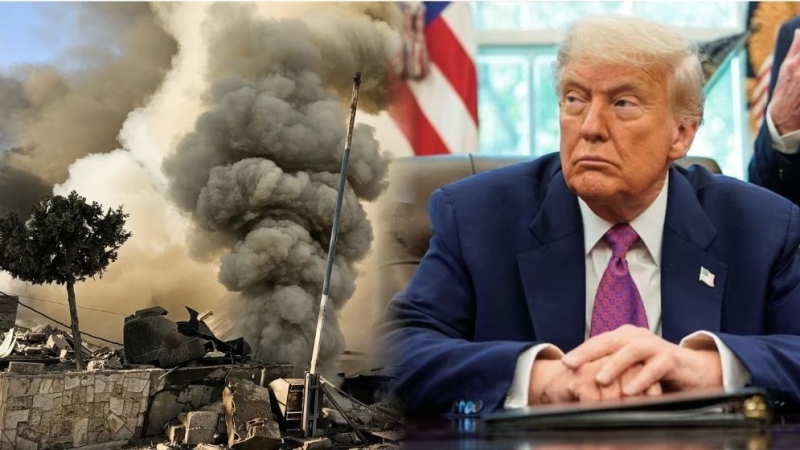
The United States is facing growing pressure to rethink its strategy in the Iran conflict as military strikes have failed to bring Tehran back to the negotiating table and diplomatic efforts remain stalled.
Despite fresh US attacks and President Donald Trump's warning that Iran would face another "beating", analysts say Washington has yet to demonstrate a clear path toward ending the conflict.
Previous diplomatic efforts also collapsed after a memorandum of understanding intended to ease tensions failed to produce lasting results.
Analysts say the US now has few attractive options. A ground offensive would expose hundreds of American troops to greater risk, while accepting Iran's effective control over the Strait of Hormuz would challenge Washington's long-standing commitment to freedom of navigation.
"We are really in a fix," said Lyle Goldstein, director of Asia Engagement at the US-based Defense Priorities think tank.
The conflict is also imposing growing economic and political costs on countries beyond the United States and Iran.
Continued disruption in the Strait of Hormuz threatens global energy supplies, with higher oil prices raising concerns over fuel, fertiliser and liquefied natural gas shortages, particularly in Europe.
Experts say any prolonged disruption could further fuel inflation and increase pressure on economies already struggling with rising living costs.
Analysts believe a long-term settlement will require a broader diplomatic framework involving Gulf states and other international stakeholders to guarantee safe navigation through the Strait of Hormuz.
One proposal under discussion would establish a multinational mechanism involving Gulf countries, including Iran, to jointly manage maritime services and help stabilise shipping and energy markets.
Iran and Oman have already held deputy foreign minister-level talks on possible arrangements for managing maritime traffic if the strategic waterway is fully reopened.
Some experts argue that such a framework could allow both Washington and Tehran to claim political success while reducing the risk of further escalation.
However, they caution that even if shipping through the Strait of Hormuz is stabilised, deeper disputes over Iran's nuclear and missile programmes would remain unresolved.
Analysts also believe European countries could eventually play a greater diplomatic role, as they did during negotiations that led to the 2015 Iran nuclear agreement.
However, strained relations between the Trump administration and several European allies have complicated prospects for a coordinated diplomatic initiative.
Observers say uncertainty over US strategy and continuing military operations remain major obstacles to reviving meaningful negotiations.
While some experts believe a compromise may ultimately become unavoidable, they warn that reaching one will require difficult concessions from both Washington and Tehran, along with sustained international diplomatic engagement.