

- Bangladesh to Introduce New Law to Curb Extortion, IGP Says |
- UN Marks 81 Years of Global Cooperation and Peace |
- Dhaka's air 5th worst in the world this morning |
- Around 7,500 Bangladeshis imprisoned in Saudi Arabia: Shama Obaed |
- Bangladesh Outperforms India in Global Hunger Index 2026 |
Trump Says US Navy May Escort Gulf Tankers
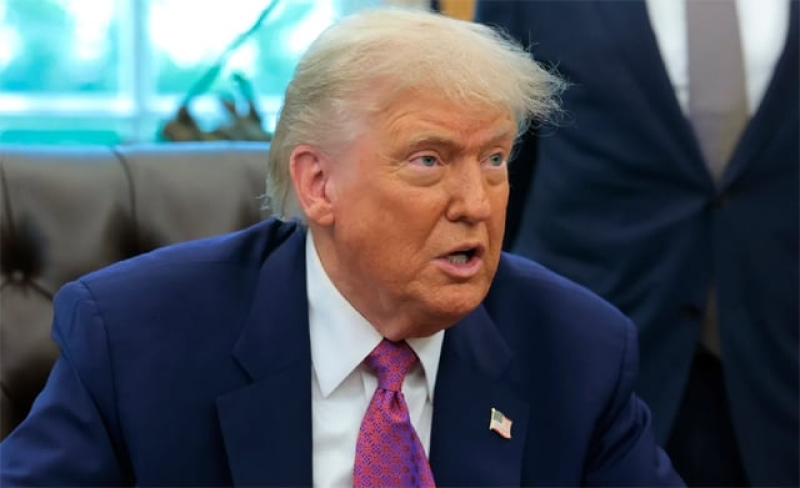
US President Donald Trump
US President Donald Trump said Tuesday that the United States Navy stands ready to escort commercial oil tankers through the Strait of Hormuz, as tensions with Iran escalate following joint US-Israeli strikes.
Posting on his Truth Social platform, Trump said, “If necessary, the United States Navy will begin escorting tankers through the Strait of Hormuz, as soon as possible,” seeking to calm market concerns over disruptions to one of the world’s most critical shipping lanes.
The conflict has rattled global markets, with vessels avoiding the Gulf route amid fears of further escalation. While US stocks trimmed earlier losses after Trump’s remarks, crude oil prices continued to climb.
Trump defended the decision to launch strikes, saying he believed Tehran was preparing to attack first. “I think they were going to attack first, and I didn’t want that to happen,” he said during a meeting at the White House with German Chancellor Friedrich Merz. “If anything, I might have forced Israel’s hand.”
His comments appeared to diverge from earlier remarks by Secretary of State Marco Rubio, who suggested Washington acted after learning Israel intended to strike.
Trump claimed the US-Israel operation had severely degraded Iran’s military capabilities, saying key naval, air force and radar assets were “just about knocked out.” However, he did not outline a clear strategy for Iran’s political future, adding that “most of the people we had in mind are dead.”
On Iran’s nuclear programme, US officials said Tehran had been close to developing a weapon, describing it as potentially “days or weeks away.” Trump said it was now “too late” for renewed talks.
The US president also signalled that Washington would provide insurance support for commercial shipping to stabilise trade flows.
German Chancellor Merz voiced support for the US-Israeli action but expressed hope the conflict would end quickly, warning that prolonged hostilities are damaging global economies.
The deepening confrontation has intensified uncertainty across the Middle East, with fears of broader regional fallout and further disruption to global energy supplies.