

- Only tourist police box on Kuakata beach about to disappear into sea |
- High Court Rejects Plea to Suspend Presidential Poll |
- PM calls for broader tax net, people-friendly revenue system |
- Women-only ‘Pink Bus’ service launched in Dhaka |
- Bangladesh to Convey Position to Myanmar Over Rohingya Claims |
Bangladesh moving towards self-financed development: Khosru
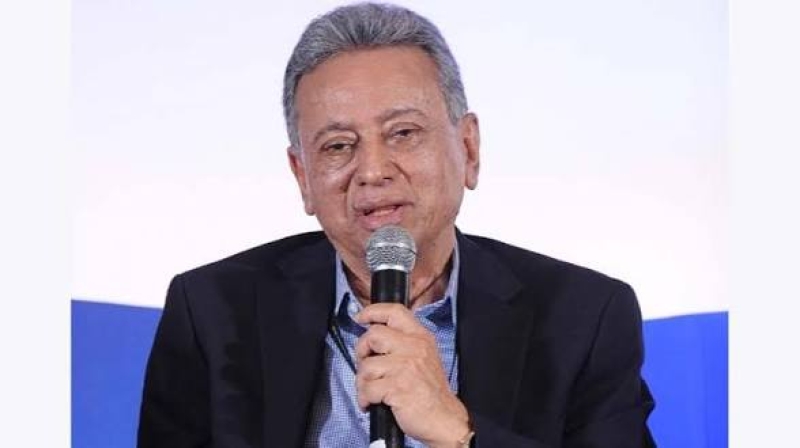
Bangladesh is moving towards a development path financed increasingly by its own resources rather than dependence on debt, Finance Minister Amir Khosru Mahmud Chowdhury said on Tuesday.
“Under the leadership of the Prime Minister, we have taken initiatives to implement bold reforms. This has been possible because of his commitment,” he said while speaking at the opening ceremony of the Revenue Conference 2026 at the Bangladesh-China Friendship Conference Centre in the capital.
The minister said a modern, cashless, and contactless revenue system will be a key pillar of a prosperous Bangladesh.
Prime Minister Tarique Rahman inaugurated the conference, organised jointly by the Internal Resources Division of the Ministry of Finance and the National Board of Revenue (NBR).
Revenue target
Khosru said achieving the revenue collection target of Tk 6.04 lakh crore is the government's most important task at present.
“By achieving this target, we will be able to build a developed and prosperous Bangladesh as announced by the Prime Minister, Insha-Allah,” he said.
The minister expressed hope that Bangladesh will overcome the challenges of graduating to a middle-income country by 2029 and build a trillion-dollar economy by 2034.
Call to business community
Khosru described businesses as the driving force of the country's economy, saying development is not possible without investment and employment generation.
He also pledged that the government will always be by the business community, urging them to cooperate with the government in achieving the revenue target.
“Paying taxes and VAT on time is the responsibility of businesses. We know that sometimes you face difficulties because of administrative complications and the behaviour of officials. We have taken initiatives to resolve these problems quickly,” the minister said.
At the same time, he said the law must be strictly enforced against those who continue to evade taxes.
Accountability must be ensured
Khosru said both taxpayers and revenue officials have responsibilities under the law. “Just as taxpayers have a responsibility to pay taxes according to the law, revenue officials also have a responsibility to serve taxpayers impartially and respectfully,” he said.
He said the accountability mechanism must also be strengthened. “Harassing an honest taxpayer and giving unfair advantages to a dishonest taxpayer are both equally unacceptable,” he said.
The minister thanked development partners, economists, researchers and civil society representatives for their contributions to the revenue reform process.
Revenue reforms
Khosru said the government has undertaken major reforms to the country's revenue administration.
He said a final decision has been taken to split the existing NBR into two independent institutions — a Revenue Policy Department and a Revenue Management Department. “This is not just an administrative reorganisation. It is a fundamental change in our approach,” he said.
The minister said the Revenue Policy Department will work as an expert policy-making body responsible for developing a balanced, competitive and development-friendly tax structure.
He acknowledged that the reforms have created some uncertainty among revenue officials but assured them that the restructuring will create clearer career paths and greater opportunities for professional development.
Own-account financing
Khosru said the national budget for fiscal 2026-27 has set a record own-account revenue target of Tk 6.04 lakh crore, which is 46 percent higher than last year's actual collection.
He acknowledged that the target may appear ambitious but said it was set deliberately to meet the country's development needs.
Referring to the Prime Minister's vision, the minister said Bangladesh must move from a debt-based economy to an investment-based economy.
“To achieve that goal, we have to finance our development with our own resources. We have to strengthen domestic resource mobilisation,” he said.
Cashless, contactless revenue system
Khosru said modernisation, expansion and end-to-end automation are essential to achieving the revenue targets.
“The culture of taxpayers having to visit tax officials without special need must end. Our goal is a completely contactless and cashless revenue administration,” he said.
VAT and customs reforms
The minister said several reforms have been introduced to the Customs Act and VAT Act in the current budget to reduce harassment and establish a trust-based system.
He said tax payment should be made easier and urged all stakeholders to play a responsible role so that taxpayers do not have to spend time and money on prolonged legal disputes.
Khosru called for making the Alternative Dispute Resolution (ADR) method more effective so that disputes can be settled quickly, fairly and transparently wherever possible.
He also called for a clear Taxpayer Service Charter specifying the services available to taxpayers, the responsibilities of officials, the procedure for filing complaints and the timeframe for resolving them.
“The performance of the revenue administration should not be judged only by how much money is collected. It should also be assessed based on taxpayer satisfaction and service delivery,” the minister said.
NBR as business partner
Khosru said the NBR should no longer be viewed merely as a revenue-collecting agency.
“The Board of Revenue is no longer just a revenue-collecting institution. You are a companion in a businessman's financial journey,” he said, urging revenue officials to ensure that taxpayers feel proud of paying taxes and regard themselves as direct partners in the government's development efforts, reports UNB.