

- July Mass Uprising Day Today |
- PM Inaugurates July Mass Uprising Memorial Museum |
- BGMEA, OCAIB move to attract Chinese investment in RMG sector |
- BSTI finds dangerously high mercury levels in 8 skin creams |
Japan Reaffirms Support for Key Projects in Bangladesh
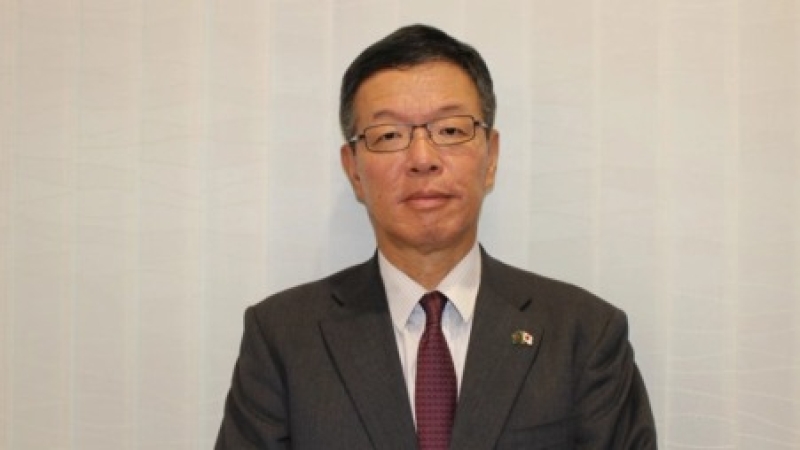
Japanese Ambassador Saida Shinichi
Japan has reaffirmed its commitment to continue advancing major development projects in Bangladesh under the new government, while prioritising the safety of its citizens living in the country, said Japanese Ambassador Saida Shinichi on Monday.
In a message, the envoy said Japan remains Bangladesh’s largest bilateral development partner and will continue cooperation across key sectors to support the country’s ongoing growth.
He said flagship infrastructure projects, including the Dhaka Mass Rapid Transit (MRT), the third terminal of Hazrat Shahjalal International Airport, and the Matarbari Deep Sea Port, are central to Japan’s Bay of Bengal Industrial Growth Belt (BIG-B) initiative.
The ambassador stressed that ensuring the safety and security of Japanese nationals in Bangladesh remains the embassy’s top priority, especially as cooperation expands further.
On defence cooperation, he noted that Bangladesh and Japan signed an agreement on the transfer of defence equipment and technology in February this year. Japan is also preparing to supply patrol boats to the Bangladesh Navy under its Official Security Assistance (OSA) programme.
Marking 10 years since the Dhaka café attack, he said Japan remains committed to protecting its citizens and preserving the memory of the tragedy.
Ambassador Saida said Bangladesh-Japan relations, built on trust and friendship since diplomatic ties were established in 1972, have strengthened further in recent years under the strategic partnership framework.
He added that the transition in Bangladesh’s political landscape earlier this year has created new momentum for bilateral cooperation, with Japan continuing its engagement without disruption even during the interim period.
Referring to high-level exchanges, he mentioned a recent visit by Japan’s Minister of Agriculture, Forestry and Fisheries, who conveyed Tokyo’s continued support for deepening cooperation under the strategic partnership.
On economic ties, he said Japanese companies have maintained their operations in Bangladesh, while the newly signed Economic Partnership Agreement is expected to further strengthen trade and investment relations.
He also highlighted growing people-to-people and cultural exchanges, noting rising interest in learning the Japanese language in Bangladesh.
Japan, he added, will continue working with Bangladesh under its vision for a Free and Open Indo-Pacific, recognising Bangladesh’s strategic importance in regional connectivity and development.