

- PM Assures Support for Waste-to-Fuel Technology |
- CJP founder Abhijeet Dipke detained after flight lands in Delhi |
- India’s young return to streets as anger against EC and Modi grows |
- Dhaka’s air quality 4th worst in the world this morning |
- Delhi on High Alert Ahead of CJP Protest With 20,000 Personnel |
OASL Seeks Foreign Financing for $50m-Plus Power Projects
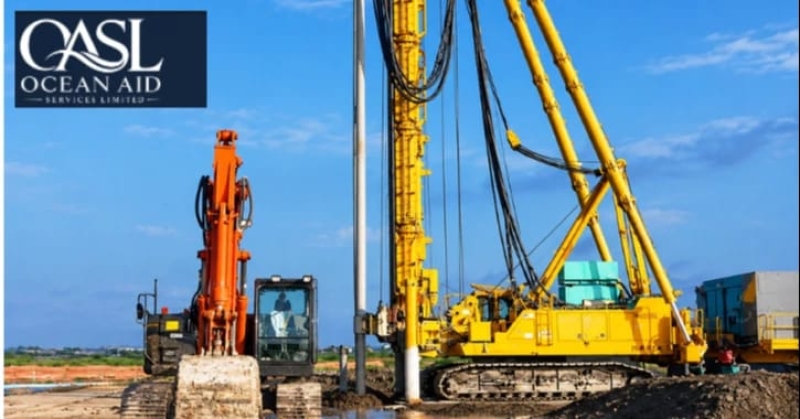
Ocean Aid Services Ltd (OASL) is seeking to connect international financiers with Bangladesh’s priority energy projects worth more than US$50 million, using an engineering, procurement, construction and finance (EPC+F) model.
OASL Managing Director AHM Manzoor Alam said the Chattogram-based company would help arrange financing for bankable projects by connecting them with qualified foreign investors and financing groups, but would not invest in the projects itself.
“We see energy security and the clean-energy transition as complementary priorities,” he said, adding that Bangladesh needs long-term capital, technology and project expertise to meet its growing infrastructure demands.
OASL is pursuing opportunities in power generation, renewable energy and energy infrastructure. Potential areas include utility-scale solar power, gas-fired and hybrid fast-track power plants, transmission lines and substations, grid automation, supervisory control and data acquisition (SCADA) systems, smart metering, battery energy storage, fuel storage facilities and liquefied petroleum gas (LPG) terminals.
According to the financing criteria OASL is working with, international financing groups prefer projects worth more than US$50 million, with an implementation period of around two to three years and an import component.
Manzoor Alam stressed that no project should be considered a committed investment until it has been formally confirmed. Specific projects would be determined through official discussions with the relevant ministries, agencies or state entities, he said.
OASL’s immediate objective is to initiate formal discussions with government ministries, agencies and state bodies to identify priority projects. This would be followed by feasibility assessments, term sheets and the development of financing structures at the appropriate stage.
Under the proposed EPC+F model, government support would include designating a sponsoring ministry or state entity, confirming project priorities, validating documentation and coordinating with relevant agencies. Where required by the financing structure, support could also involve a sovereign loan arrangement through the Ministry of Finance.
Manzoor Alam said local participation would be central to the proposed model. Depending on the project, OASL could work with ministries, utilities, state-owned entities, Bangladeshi companies, engineering, procurement and construction contractors, and local suppliers.
“International partners will bring technology, engineering expertise, equipment, project management and finance, while OASL will handle local coordination and stakeholder engagement,” he said.
He said the projects could generate employment during construction and operation, introduce modern technology and expertise, support local industries and stimulate economic activity around major infrastructure developments.
However, the scale of these benefits would depend on each project’s size, structure and commercial performance, he added.
Manzoor Alam pointed to Bangladesh’s projected additional electricity needs towards 2030 and the relatively small share of renewable energy in the current power mix as creating opportunities for renewable generation, grid upgrades and energy storage.
“OASL is committed to working within Bangladesh’s established regulatory and procurement frameworks,” he said.