

- Tarique Seeks Japanese Support for Energy, Tech and Infrastructure |
- Japan eyes 1 trillion yen investment in Bangladesh over 5 years |
- Dhaka Among World’s 11 Most Polluted Cities on Tuesday |
- Tide Rising, Time Running Out For Coastal People, Wildlife |
- Dhaka Turns To Solar As Fuel Crisis Turns Power Plants Idle |
UN Biodiversity Treaty Takes Effect, Targets 30% Oceans
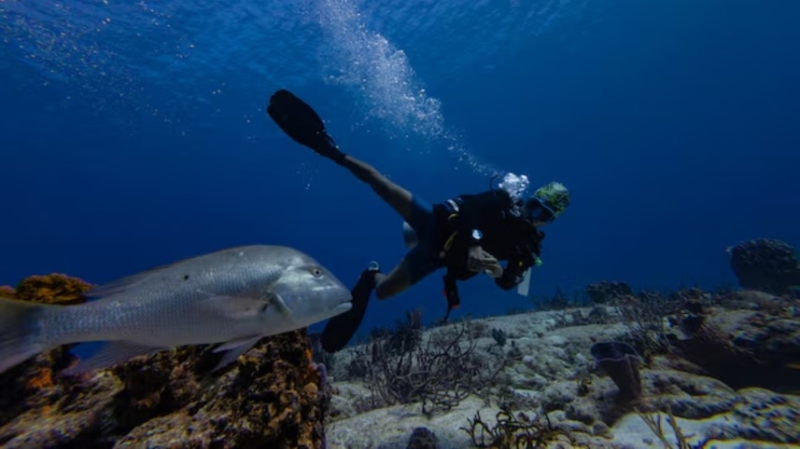
A diver swims through a coral reef near the Island of Cozumel, Mexico, June 27, 2024.
A landmark UN treaty aimed at protecting biodiversity in international waters entered into force on Saturday, creating a legally binding framework to curb threats such as overfishing and advance the goal of safeguarding 30 percent of the world’s oceans by 2030.
Known as the Biodiversity Beyond National Jurisdiction (BBNJ) treaty, the agreement was finalised in March 2023 after more than 15 years of negotiations. It enables the establishment of a global network of marine protected areas across vast ocean regions that previously lay outside national control and regulation.
The treaty crossed the required threshold of 60 ratifications on September 19 last year, triggering its entry into force 120 days later. Since then, the number of ratifying countries has risen to more than 80, including China, Brazil and Japan, while others are expected to follow. The United States has signed the treaty but has yet to ratify it.
Officials involved in the process say the agreement marks the first time that two-thirds of the ocean, covering nearly half the planet’s surface, will be governed by a comprehensive legal regime.
Under the treaty, countries are required to conduct environmental impact assessments for activities that could affect ocean ecosystems. It also introduces mechanisms to ensure fair sharing of benefits from the “blue economy,” including marine genetic resources used in sectors such as biotechnology.
Environmental groups note that meeting the “30 by 30” target will require the creation of more than 190,000 protected areas worldwide. At present, only about 8 percent of the oceans, roughly 29 million square kilometres, are under formal protection.
However, conservationists caution that the treaty does not address seabed mining, which falls under the mandate of the International Seabed Authority, leaving one of the most contentious threats to marine ecosystems outside its scope.