

- Rooppur NPP: Rosatom installs automated control system at Unit-1 |
- Mount Everest season opens late, despite huge ice block, high travel costs |
- 2 more children die with measles-like symptoms in Sylhet |
- Dhaka again ranks world’s most polluted city Friday morning |
- Speed up nationality verification for ‘illegal’ migrants: Delhi |
The Right To Safe Food Must At All Costs
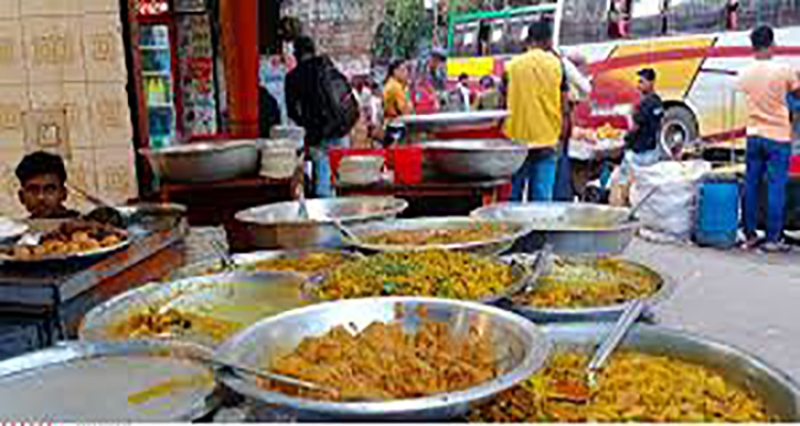
For millions of Bangladeshis, eating outside the home is a necessity rather than a choice. In cities and towns across the country, office workers, students, day labourers, and busy families rely heavily on meals prepared in restaurants, street stalls, and roadside eateries. But for many, each meal carries a hidden risk: the food may be adulterated, unhygienic, or even toxic. Despite efforts from authorities and sporadic public awareness campaigns, safe food outside the home remains a grey area.
A walk through Dhaka’s bustling markets offers an immediate illustration. Vendors display fruits and vegetables with vibrant colours, but closer inspection reveals potential hazards. Fish preserved with formalin, artificially ripened fruits, and snacks containing harmful additives are common. Street-side kitchens prepare meals in cramped, often unsanitary conditions, and storage practices frequently defy basic hygiene standards. For consumers, detecting unsafe food is nearly impossible, making every bite a gamble.
Experts say the consequences of such food practices are severe. Contaminated meals contribute to gastrointestinal infections, liver and kidney damage, allergies, and long-term illnesses, including cancer. Health clinics and hospitals, especially in urban areas, see a steady stream of patients suffering from foodborne diseases. Health economists point out that these illnesses create a significant financial burden, both for families and the national healthcare system.
“Ensuring safe food could dramatically reduce healthcare costs,” said a public health economist. “Fewer food-related illnesses mean lower treatment expenses for families and less strain on hospitals and clinics.”
Despite the scale of the problem, Bangladesh’s regulatory framework is struggling to keep up. The Bangladesh Safe Food Authority (BSFA), established in 2015, has been mandated to oversee food safety nationwide. However, as the BSFA chairman Zakaria explained, the institution faces significant limitations.
“Laws in Bangladesh are currently insufficient to guarantee food safety in the market,” he said. “We need a new law that forces everyone involved in food processing to ensure safe food.”
Zakaria, who also serves as an additional secretary of the government, outlined other challenges facing the authority. The BSFA lacks critical laboratory facilities for testing food, and there is a shortage of trained personnel with expertise in food safety. These deficiencies limit the agency’s capacity to conduct thorough inspections and enforce regulations consistently.
“Despite these challenges, we are moving forward gradually to take measures that ensure safe food in markets,” Zakaria said. “Coordinated efforts among all stakeholders are essential. We also need mass awareness campaigns to educate the public about the dangers of unhygienic and adulterated food.”
In the absence of robust enforcement, consumer groups argue that many small eateries and street vendors operate with little regard for hygiene. Many do not have proper licensing, and training in safe food handling is rare. Even in established restaurants, hygiene standards vary widely. The result is that millions of urban residents remain vulnerable, especially those who cannot afford more expensive, regulated options.
Experts propose measures such as a “sticker law” to provide visible certification for safe food outlets. Under this system, restaurants and vendors that meet hygiene standards would display official stickers issued after inspection. Consumers could then easily identify safe establishments, while businesses would have an incentive to maintain higher hygiene standards.
“Consumers should immediately know whether a food outlet is safe,” said a food safety campaigner. “Visible certification would encourage competition among businesses to uphold better standards.”
Alongside certification, experts argue for stronger legal penalties for food adulteration. Heavier fines, business closures, and imprisonment for serious offenses could deter offenders. Currently, existing laws are often considered too lenient to prevent repeat violations.
While the risks are widespread, some positive developments are emerging. A growing number of meal delivery services now supply office workers with home-style food via tiffin carriers. These meals are typically prepared in controlled kitchens and delivered directly to workplaces, offering a safer alternative to roadside stalls. Many corporate offices, banks, and government departments have adopted such services to ensure employees receive hygienic meals.
Nutritionists say these initiatives demonstrate that large-scale safe food provision is possible if proper systems and monitoring mechanisms are implemented. Public awareness is also slowly improving. Investigative media reports, consumer advocacy campaigns, and social media coverage have highlighted cases of adulteration, prompting occasional enforcement drives by authorities.
Some urban residents are adapting their habits as well. Many choose restaurants with visible hygiene practices or carry home-cooked meals to work. However, experts stress that the responsibility cannot fall entirely on consumers. Safe food requires a comprehensive national strategy, involving farmers, processors, transporters, retailers, and restaurants. Each stage of the food supply chain must follow strict hygiene and safety standards.
Laboratory capacity is another crucial factor. Advanced testing facilities and trained personnel are necessary to detect harmful chemicals and adulterants efficiently. Experts argue that investments in laboratories, equipment, and skilled staff would allow authorities to respond faster to contamination risks.
Education and training for food handlers are equally important. Even simple practices, such as handwashing, clean utensils, and safe storage, can significantly reduce contamination. Specialist programmes targeting street vendors, small eateries, and food processors could elevate standards across the board.
Coordination among government agencies is also essential. Currently, responsibilities for food safety are distributed across several institutions, including health authorities, city corporations, and consumer protection bodies. Experts argue that clearer communication and shared protocols would improve enforcement and reduce gaps in oversight.
Despite these challenges, government officials remain committed to food safety as a priority. Zakaria emphasised that while obstacles are real, gradual progress is being made.
“Ensuring safe food is not only a health issue but also an economic and social one,” he said. “A healthy population is essential for national development. If we can implement stricter laws, improve monitoring, and raise awareness, the benefits will be substantial — fewer illnesses, lower treatment costs, and greater consumer confidence.”
For many Bangladeshis, though, the daily reality is far from reassuring. Street stalls, roadside vendors, and even some restaurants continue to serve food that may be unsafe. For office workers rushing to grab breakfast, students buying snacks between classes, and families relying on local markets for meals, each meal carries uncertainty.
Health experts and authorities agree that stronger legislation, better enforcement, and widespread public awareness are essential to reducing the risks. They argue that without decisive action, unsafe food will remain a persistent threat to public health.
The broader social and economic consequences are clear. Frequent illness reduces productivity, increases medical expenses, and undermines trust in the food system. In a country where millions depend on external meals daily, addressing food safety is critical not only for individual health but also for national development.
“The struggle for safe food is far from over,” Zakaria said. “It requires collaboration between government, private sector, and citizens. Only then can we make food safety a reality for all.”
While initiatives such as tiffin-based office meals and selective restaurant certifications provide hope, the journey toward universally safe food remains long. Public health advocates stress that ensuring food safety is a shared responsibility — from farmers and processors to vendors, consumers, and regulators.
Bangladesh’s experience highlights a stark truth: for millions, the risk of consuming adulterated or unhygienic food is a daily reality. Without stronger laws, better coordination, and persistent awareness efforts, safe food outside the home will remain more aspiration than reality.
Until systemic improvements are implemented, every meal eaten away from home carries an element of uncertainty. Each bite reflects broader challenges in legislation, enforcement, and public awareness, underscoring that ensuring safe food is not just a health issue — it is a societal imperative. (This story has been published in the March print edition of the GreenWatch)