

- Rooppur Unit-1 Gets Approval for First Nuclear Reaction |
- DP World to Operate Chattogram Port NCT for 15 Years |
- Anne Carson Wins 2026 Nobel Prize in Literature |
- Workers Helping Feed the World but Starved of Dignity |
- They feed the world, but food workers are Earth’s most exploited |
Fermentation Makes Sustainable Food More Delicious
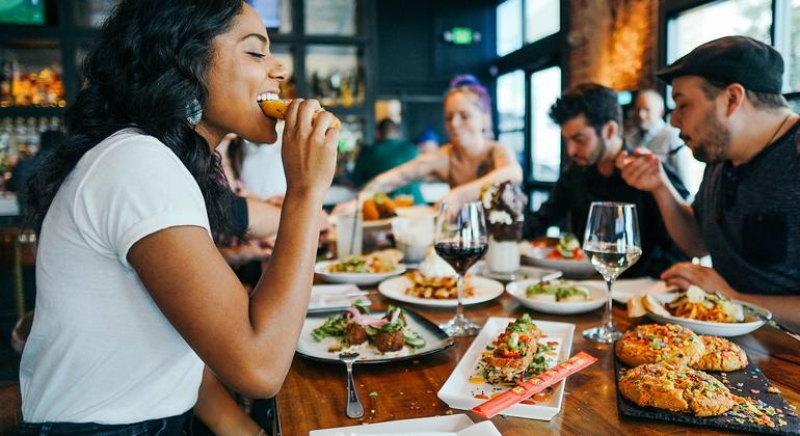
Diners enjoy a meal at a restaurant in Tampa in the United States.
Sustainability and healthy eating do not have to come at the expense of flavour, according to chef Jaume Biarnés, who believes fermentation could play a major role in shaping the future of food.
Speaking ahead of Sustainable Gastronomy Day, Biarnés said traditional fermentation techniques can reduce food waste, enhance flavour, and encourage more sustainable eating habits.
At the Yondu Culinary Studio in Lower Manhattan, Biarnés demonstrates how deep, savoury flavours can be created using simple vegetables. He believes Korean fermentation techniques offer practical solutions to one of the world’s biggest challenges—feeding a growing population without exhausting the planet’s resources.
According to Biarnés, Korea’s strong culture of vegetable consumption is closely tied to fermentation, which transforms vegetables into flavourful and appealing dishes.
He said increasing vegetable consumption globally will depend not only on awareness but also on making plant-based foods enjoyable and satisfying.
For Biarnés, sustainability is not a trend but a core principle of modern cooking and restaurant management.
A former chef at the renowned El Bulli restaurant in Spain, he said sustainability must also make economic sense, especially in an industry where operating costs remain high and profit margins are often narrow.
He explained that true sustainability means securing resources for the future while ensuring businesses remain financially viable.
Biarnés said restaurants can adopt more sustainable practices gradually, even if they were not originally designed with sustainability in mind.
He noted that food waste management is already a key part of efficient kitchen operations. However, sourcing local ingredients remains a bigger challenge, as many chefs lack the time or access to connect with regional suppliers.
He stressed the need to improve food distribution systems so local products become more accessible and affordable for businesses.
Biarnés also highlighted the importance of supportive public policy. He pointed to Europe’s restrictions on many single-use products, contrasting them with continued reliance on disposable materials in the United States.
He said policymakers must help businesses move away from wasteful disposable materials and adopt more sustainable alternatives.
At the heart of Biarnés’ approach is fermentation, an ancient preservation technique that remains highly relevant in today’s climate-conscious food industry.
He explained that fermentation has long been used around the world in foods such as pickles, sauerkraut, cheese, and beverages—not only to preserve food but also to build flavour.
By extending shelf life, fermentation helps reduce food waste. By enhancing taste, it also makes plant-based diets more attractive to consumers.
Biarnés said this creates a double benefit at a time when shifting toward vegetable-rich diets is increasingly recognised as one of the most effective ways to reduce environmental impact.
Originally from Catalonia and now promoting Korean culinary traditions in New York, Biarnés said modern gastronomy is increasingly shaped by cross-cultural exchange.
He noted that ideas now travel faster than ingredients, with recipes often spreading rapidly through digital platforms before ingredients become widely available.
Biarnés believes food remains one of the strongest ways to build understanding between people and cultures.
He said sharing dishes and ingredients creates meaningful connections and offers a powerful way to express culture, identity, and hospitality.
For people seeking more sustainable eating habits at home, Biarnés recommends simple but practical changes.
He encourages consumers to buy fresh ingredients instead of processed foods, choose seasonal produce, and pay close attention to where food comes from.
He also advises careful meal planning to minimise food waste by purchasing only what is needed and making better use of refrigeration and freezing.
Above all, Biarnés said enjoyment must remain central to sustainable eating.
He stressed that pleasure is the most important factor in changing eating habits, arguing that people are more likely to embrace vegetables and sustainable diets when food is delicious and enjoyable.
Sustainable Gastronomy Day is observed annually on 18 June to recognise gastronomy as an important cultural expression linked to the world’s natural and cultural diversity.