

- Umrah pilgrim from Cumilla killed in Riyadh airport attack |
- Senior Secy to represent Dhaka at 1st BIMSTEC HMs’ meet in Delhi |
- Rooppur Nuclear Power Plant achieves nuclear criticality |
- PM Orders Proper Use of Public Money for National Interest |
- PM Seeks Marubeni Investment in AI Data Centre, KAFCO |
WHO Chief Spotlights Key Global Health Emergencies
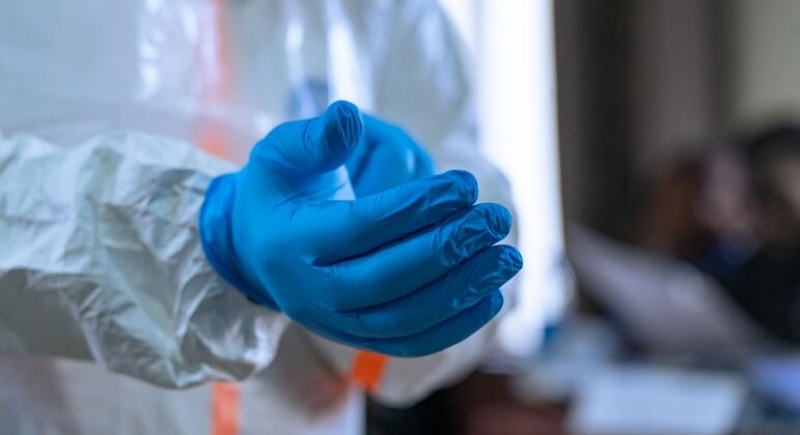
Protective equipment is provided for response providers as at least six Ebola survivors have been health workers who got sick while supporting patients in DR Congo.
The World Health Organization on Thursday provided an update on major global health emergencies, announcing the official end of the hantavirus outbreak while warning about worsening Ebola outbreaks in Africa and growing humanitarian challenges in earthquake-hit Venezuela.
WHO Director-General Tedros Adhanom Ghebreyesus highlighted a range of urgent global health concerns, including infectious disease outbreaks, air pollution and the health risks posed by digital environments for young people.
“The outbreaks of hantavirus, Ebola and Marburg all show why there is no alternative to international cooperation in the face of international threats,” Tedros said.
“No country alone can fight these threats.”
Tedros said next week would provide another opportunity for global cooperation as member states continue negotiations on the pathogen access and benefit-sharing system under the WHO Pandemic Agreement.
Hantavirus Outbreak Declared Over
The WHO chief announced that the global hantavirus outbreak has officially ended.
The outbreak recorded 13 confirmed cases, including three deaths. More than 650 contacts were identified and monitored by health authorities across 33 countries and territories.
Tedros said the final contact linked to an infected passenger aboard the MV Hondius completed quarantine, tested negative and returned home.
No additional cases have been reported since May 25.
Ebola Outbreak Worsens in Africa
Tedros warned that Ebola continues to spread in Democratic Republic of the Congo.
As of Thursday, 1,406 cases had been confirmed, with 438 deaths reported. The outbreak is expanding rapidly, with an average of 38 new cases recorded daily over the past two weeks.
In Uganda, no new Ebola cases have been reported since June 21.
Tedros said response efforts in DR Congo have strengthened under government leadership, with testing capacity expanded to 10 laboratories closer to affected communities, alongside improved contact tracing and treatment capacity.
A clinical trial involving two therapeutic treatments was launched on Thursday with the enrolment of the first patient.
WHO has also granted emergency use listing for the first molecular diagnostic test for the Bundibugyo virus.
Despite progress, Tedros said major challenges remain.
“Despite all this progress, we continue to face significant challenges, including mistrust and violence,” he said.
This week, an Ebola treatment centre in Ituri province was attacked and set on fire, killing two people and forcing patients to flee.
Venezuela Faces Growing Humanitarian Crisis
Tedros also highlighted the worsening crisis in Venezuela following last week’s twin earthquakes.
The disaster has left more than 2,300 people dead, over 5,000 injured and nearly 16,000 homeless. Officials warned the casualty toll could rise further as recovery operations continue.
“The earthquake compounds an already severe humanitarian crisis, stretching a health system that was already struggling to meet people’s needs,” Tedros said.
WHO has responded by releasing $1.5 million from its Contingency Fund for Emergencies and delivering more than six metric tonnes of emergency medical supplies.
Another 28 metric tonnes of supplies are expected to be shipped in the coming days.
The agency is also coordinating international emergency medical teams and supporting Venezuela’s health system in maintaining routine healthcare services.
Air Pollution Still a Silent Killer
Tedros warned that air pollution remains one of the world’s deadliest health threats.
Around 6.5 billion people are currently exposed to pollution levels exceeding WHO’s interim target of 35 micrograms per cubic metre.
He described air pollution as an “invisible threat” linked to heart disease, stroke, lung cancer and other serious illnesses.
WHO estimates air pollution contributes to 6.7 million premature deaths each year.
Protecting Young People Online
Tedros also raised concerns about the health impact of digital environments and social media on young people.
He said digital platforms significantly influence public health because algorithms increasingly prioritise engagement and attention over accuracy.
This, he warned, allows misinformation and misleading health claims to spread rapidly.
“Digital environments are not neutral,” Tedros said.
He added that WHO is working to strengthen research, support national policies and promote safer and more equitable digital health environments.
“Above all, we must listen to young people,” Tedros said.
“They are not experimental subjects, a captive market, or a commodity. They are our future.”
“Together, we can and must shape digital environments that protect and support their health.”