

- Apratim Murder Suspects Confessed, Says Home Minister |
- Dhaka's air decorded unhealthy for sensitive groups Sunday morning |
- Meet Earth’s newest wild cat species, the first named in over a century |
- Bus torched in Mymensingh early Sunday |
- Anthropic, OpenAI, SpaceXAI, Google deal on AI slowdown illegal? |
Gaza Water Crisis Worsens, Millions Struggle for Clean Water
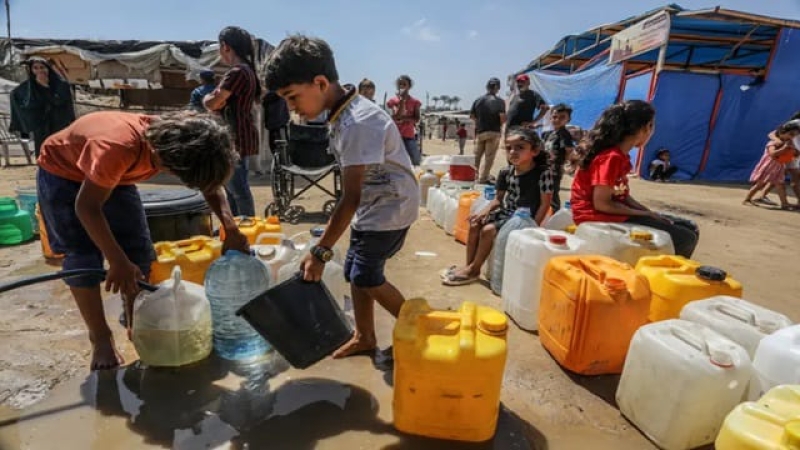
More than half of Gaza's population is receiving less than six litres of water per person a day for drinking and cooking, far below the minimum emergency requirement, according to the United Nations Office for the Coordination of Humanitarian Affairs (OCHA).
More than 1.3 million people, or over half of the population in the Gaza Strip, are currently getting an average of less than six litres of water per person each day for drinking and cooking.
In an emergency, at least 15 litres of water per person per day is considered necessary for drinking, cooking and basic hygiene.
Another 700,000 people, representing more than one-third of Gaza's population, are receiving less than nine litres of water a day, OCHA said.
The severe shortage is making it increasingly difficult for residents to maintain personal hygiene, clean their homes and care for children.
People are also being forced to spend hours queuing at water collection points. Many households do not have enough containers to transport water home, leaving children to take part in the collection process.
Around three out of every four people in Gaza now depend on water delivered by trucks, according to the UN.
Humanitarian organisations supplied water to more than 250 water collection points and over 100 displacement camps each day during the past month.
The sanitation situation is also worsening. Only about half of Gaza's households currently have access to basic sanitation facilities.
More than 900,000 people are at risk from direct exposure to accumulated waste in residential areas, according to OCHA.
The lack of adequate water, sanitation and hygiene facilities is increasing the risk of disease and creating further hardships for Gaza's population, which has already endured prolonged displacement and severe humanitarian conditions.