

- Nation Votes Tomorrow in 13th Poll, Referendum |
- Key in your hands, use it wisely: Prof Yunus tells voters |
- Yunus Urges Voters to Shape a ‘New Bangladesh’ |
- Bangladesh Polls: Campaign Ends as Voters Weigh Pledges |
- Bangladesh Heads to First Gen Z-Driven Competitive Poll |
Gaza Radio Returns to Air Amid Ruins
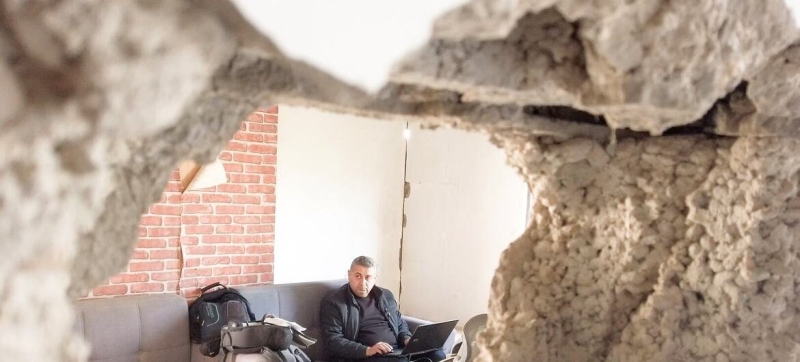
Zaman FM radio station in Gaza has recently returned to the air using limited technical capabilities, operating from its damaged headquarters.
Broadcaster Rami Al-Sharafi works on a laptop inside the damaged Zaman FM radio station in Gaza, marking what may seem an unlikely return to the airwaves amid the rubble of the deadly two-year Israel-Hamas war.
Before the conflict erupted, 23 local radio stations were operating in Gaza. All were destroyed and ceased broadcasting, he said.
“Today, we are the only radio station broadcasting on FM from within Gaza after this widespread destruction,” he added. “We hope other local radio stations will resume broadcasting, allowing competition in providing media services to the people of the Gaza Strip.”
Ahead of World Radio Day, observed on 13 February, the station’s return comes at a time when Gaza’s media infrastructure continues to face serious challenges. There are growing local and international calls to support journalism as part of broader recovery and reconstruction efforts in the sector.
After nearly two years off the air due to the war, some local stations in Gaza have begun transmitting again, signalling gradual efforts to revive the media landscape in a territory where much of the infrastructure and many civilian institutions have been devastated by Israeli attacks.
Zaman FM operates from the Tel al-Hawa neighbourhood of Gaza City, an area heavily affected during the conflict. Streets remain filled with debris, and buildings bear visible signs of destruction.
The cracked walls of the station tell their own story. Inside, the studio is far from conventional. Staff sift through rubble to keep the station running, working with minimal technical resources. Awareness posters warning of the dangers of unstable buildings hang behind them.
Despite the damage, local radio remains vital. With humanitarian crises ongoing, frequent power outages and limited access to other media, radio has become one of the most effective ways to share essential information, including health guidance and updates on available services.
Mr Al-Sharafi, who also hosts the morning programme An Hour of Time, said Gaza urgently needs professional local stations capable of broadcasting awareness messages and guidance, especially amid the spread of disease, disruption to education and the breakdown of basic services.
“We need to deliver information to the population and guide them to services that have stopped and are gradually resuming,” he said, particularly given the difficult health conditions and the spread of epidemics.
Surrounded by destruction, Mr Al-Sharafi continues his work behind a dust-covered microphone, sending morning greetings and sharing critical updates. In a city still struggling to recover, his voice carries a measure of hope across the airwaves.