

- Around 7,500 Bangladeshis imprisoned in Saudi Arabia: Shama Obaed |
- Bangladesh Outperforms India in Global Hunger Index 2026 |
- Covered van hits Gazipur police patrol team, killing SI, BNP leader |
- Korean City scrambles to rescue dusky shark after it returns to canal |
- PM inspects Mongla Port, Sundarbans, proposed economic zone |
Leadership on corruption: A test the world is failing
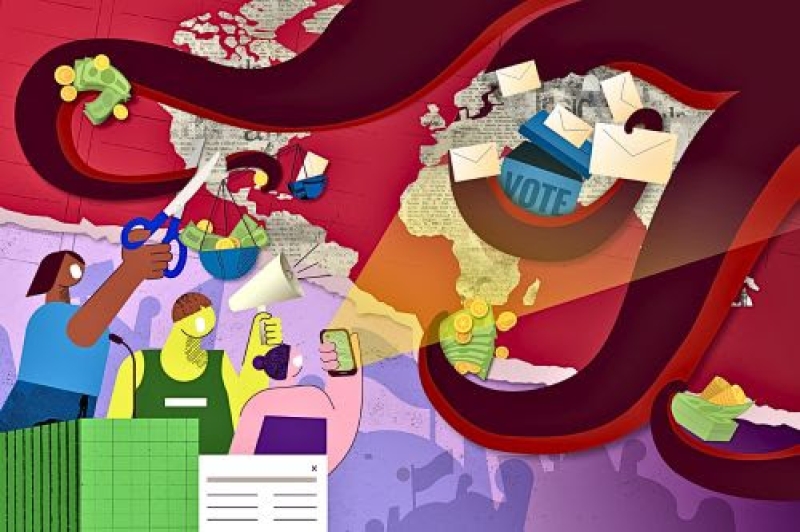
Corruption Perception Index.
This week, we published our annual Corruption Perceptions Index (CPI), which scores countries around the world by perceived levels of public sector corruption. Transparency International’s CPI 2025 shows that world leaders are failing to act against corruption, which remains a threat to democracy, freedom and justice. While a small number of countries have made progress, the overall picture is one of stagnation and decline, with real consequences for people’s lives.
The CPI ranks 182 countries and territories on a scale from 0 (highly corrupt) to 100 (very clean). The results paint a stark picture: the global average score has fallen to 42, with more than two-thirds of countries scoring below 50. No country scores a perfect 100, and the number of countries scoring above 80 has shrunk from 12 a decade ago to just five.
A decline in leadership against corruption
This decline is not inevitable; it reflects a lack of political courage. Even established democracies are experiencing a worrying decline in performance, as checks and balances are weakened and enforcement is scaled back. In countries such as the United States, France, New Zealand and the United Kingdom, corruption risks have increased. In many European countries, anti-corruption efforts have largely stalled over the past decade. The EU’s first anti-corruption directive, agreed in December 2025, was a milestone, but resistance from some member states has diluted its ambition and will limit its impact.
The United States sustained its downward slide to its lowest-ever score. Although 2025 developments are not yet fully reflected, actions targeting independent voices and undermining judicial independence raise serious concerns.
Restrictions on civic space
Shrinking civic space is making corruption harder to expose. Since 2012, most countries with major declines in their CPI scores have also increased restrictions on civil society, journalists and rights, like freedom of peaceful assembly. By making it hard or dangerous for citizens, NGOs and journalists to challenge abuses of power, they are reducing transparency and accountability.
Public frustration with unaccountable leadership is rising, especially among young people. In 2025, Gen Z-led protests spread across countries with persistently low CPI scores. In Nepal and Madagascar, mass demonstrations against corruption and failing public services led to the fall of both governments.
Yet the CPI also offers hope. Since 2012, 31 countries have significantly improved their scores, demonstrating that sustained political will makes a difference. Among the biggest improvers were Estonia, South Korea and Seychelles. The long-term improvements in democratic countries like these reflect sustained momentum in reforms, strengthened oversight institutions and broad political consensus in favour of clean governance. Success has been attributed to, among other things, digitising public services, professionalising the civil service, and embedding regional and global governance standards.
Our research shows that corruption persists not because solutions are missing, but because leadership is. There is a clear blueprint to hold power to account, from democratic processes and independent oversight to a free and open civil society.
We are calling for renewed political leadership on anti-corruption, including existing laws to be fully enforced, international commitments to be implemented, and reforms to be introduced to strengthen transparency, oversight and accountability.
We are also urging governments to protect civic space by ending attacks on journalists, NGOs and whistleblowers, and ceasing restrictions on the work of independent civil society.
We also want to see the closure of secrecy loopholes that allow corrupt money to move across borders, including by strengthening oversight of professional gatekeepers and ensuring transparency around the true ownership of companies, trusts and assets.
At a time when some governments are disregarding international norms, the question is whether leaders will act with integrity and live up to their responsibility to deliver a better future for people around the world.
Corruption Perceptions Index 2025
Transparency International’s 2025 Corruption Perceptions Index (CPI) provides an in-depth overview of key global trends in public sector corruption. It ranks 182 countries and analyses differences across regions, highlighting major challenges, leadership gaps, and the wider implications for democracy and governance.
CPI 2025 findings and insights
The latest CPI shows that corruption is getting worse around the world. Even traditionally strong democracies like the United States, United Kingdom and parts of Europe have seen their scores slip. It also offers comparative rankings and long-term insights into the factors shaping progress or decline in the global fight against corruption.
CPI 2025 report
This publication links declining corruption control to weakened democratic checks and restrictions on civic freedoms, and notes that where civic space is curtailed, corruption tends to rise. It provides an overview of the current state of corruption globally alongside recommendations on how to address the problem. – Transparency International