

- Migrant deaths climb sharply in 2026, new UN data shows |
- Rainfall on the coast due to the effect of a low pressure |
- Planting Krishna chura and Sonalu plants on roads to enhance Kuakata’s beauty |
- Rizvi Named Acting BNP Secretary General After Fakhrul Resigns |
- Mirza Fakhrul Nominated by BNP for Presidency |
Porwar blames govt ‘mismanagement’ for worsening power, gas crisis
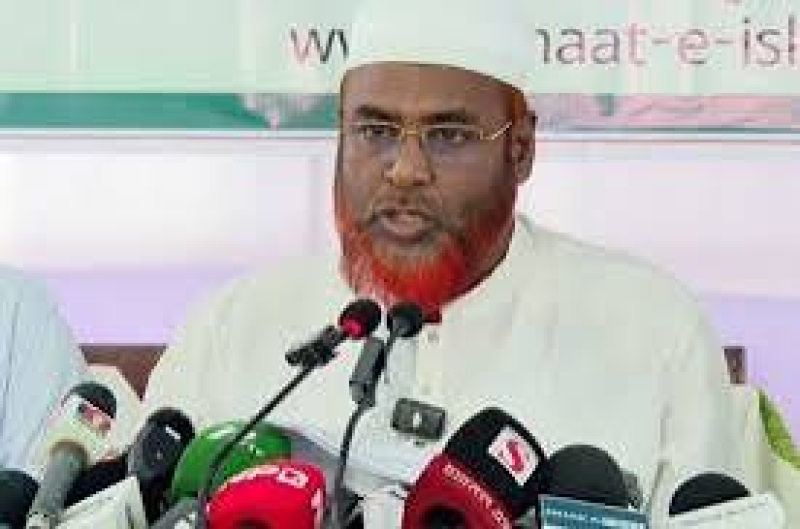
Bangladesh Jamaat-e-Islami Secretary General Mia Golam Porwar on Thursday blamed the government’s “mismanagement, inefficiency, lack of foresight, widespread corruption and politicisation of various institutions” for the worsening power and gas crisis in the country.
In a statement, he expressed deep concern over the severe shortage of electricity and gas and the resulting public suffering, and strongly condemned what he described as the government’s failure to manage the power sector.
Porwar said the country has recently been experiencing a severe power and gas crisis, with a significant gap between demand and supply causing widespread public suffering.
He said the country was hit by extensive load shedding since August 9. According to the statement, the electricity shortfall stood at 3,671 megawatts on August 9, 3,757MW on August 10, 3,465MW on August 11 and 3,382MW on August 12.
“This shows that the country has faced an average power shortage of around 3,500MW in recent days,” the Jamaat leader said, adding that people and the industrial sector were bearing the brunt of the crisis.
He also said on Wednesday, gas supply stood at 2,030 million cubic feet per day (mmcfd) against a demand for 3,800 mmcfd.
“The power and gas crisis has reached an extreme level due to the government’s mismanagement, inefficiency, lack of foresight, widespread corruption and politicisation of various institutions,” Porwar said.
He said public anger is growing as the energy crisis deepened, referring to a letter sent by the Bangladesh Palli Bidyut Association to the Police Headquarters on Wednesday, seeking enhanced security at 80 rural electrification co-operatives amid the deteriorating situation.
The Jamaat secretary general said the move reflects the government’s failure in managing the power sector.
Citing media reports, he said Nilphamari in the northern region was receiving 45-55MW against a demand for 80MW, while Kushtia was receiving 85-95MW against a demand for 155MW. “Such a situation exists across the country, prompting power-sector officials to seek enhanced security,” he said.
Porwar said the crisis has worsened because the government has failed to take long-term decisions on power management.
Production at industries is being disrupted, while people are struggling to carry out routine household activities, including cooking, because of shortages of electricity and gas, he said. Students are also facing disruptions to their studies, he added.
“Overall, people’s lives have become miserable,” the Jamaat leader said, accusing the government of failing to take effective measures to address the crisis and describing it as an indication of its irresponsibility towards the people.
He expressed concern that the government could further deepen the crisis by providing renewed benefits to old oligarchs in the name of privatising the energy sector.
To ease public suffering, Porwar demanded that the government increase gas supplies, stop gas theft in industries, reduce leakage and system losses, formulate necessary policies and facilitate the import of equipment for energy conversion, and take measures to prevent oil smuggling.
He also called for arrangements to import crude oil through government or private initiatives and urged the authorities to take effective measures to improve the skills of those involved in electricity generation and distribution.
To address the existing crisis and ensure energy security, the Jamaat leader said it is essential to step up domestic gas exploration by bringing in capable foreign partners for onshore reservoir management, including the use of new technologies, as well as drilling new exploration and development wells, reports UNB.
“If the government fails to take initiatives to meet the basic and everyday needs of the people, it will have to bear responsibility for any situation that may arise,” he said.