

- 7 fake CID members held in Magura kidnapping attempt |
- Flood on Nepal-Tibet Border Kills at Least 95 |
- US Suspends Visa Interviews Worldwide for Consular Training |
- Mecca Pact Puts Bangladesh’s Foreign Policy to New Test |
- Remittance reaches $2.34 billion in first 24 days of August |
Audit Raises Questions Over Rohingya Aid Spending
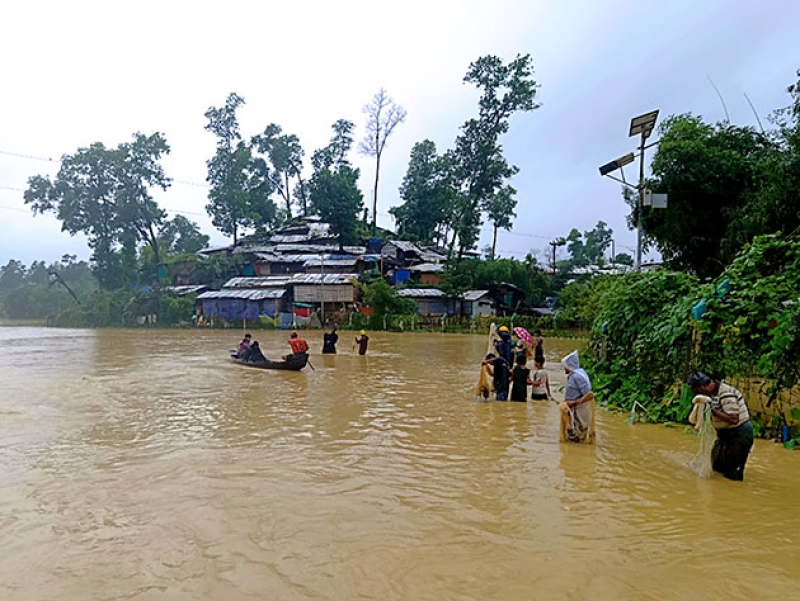
The deaths of at least 14 Rohingya refugees in landslides and flash floods triggered by heavy monsoon rains this week have renewed concerns over living conditions in the refugee camps in Cox's Bazar, while also raising broader questions about how humanitarian funding has been managed.
Among the victims were three schoolgirls and a teacher who died when a landslide buried an Islamic learning centre on July 8. At least 10 other refugees were killed in separate landslides across six camps.
Thousands of refugee families have since been relocated to safer locations, mainly learning centres and emergency shelters, after hundreds of bamboo-and-tarpaulin homes were damaged or destroyed by floods and landslides.
The tragedy has once again prompted humanitarian agencies to appeal for additional international assistance. However, concerns have also emerged over the effectiveness of aid spending following findings contained in an audit by the UN Office of Internal Oversight Services (OIOS).
The audit identified weaknesses in project planning, procurement, monitoring and the efficient use of humanitarian resources in the Rohingya response in Bangladesh.
According to the audit, several infrastructure projects remained unused despite significant investment, while overlapping programmes, procurement shortcomings and implementation failures reduced the overall effectiveness of humanitarian assistance.
Among the projects highlighted was a specialised hospital in Ukhiya costing about US$1.5 million that reportedly remained unused. The audit also cited an unused 20-bed inpatient facility in Bhasan Char equipped with solar systems worth about US$140,000 and an X-ray machine valued at more than US$74,000.
It also questioned expenditure on items such as honour boards, staff uniforms and documentary production at a time when humanitarian needs remained severe.
The report further noted that more than US$182,000 was spent on cutlery despite limited use among refugee households, while food assistance for many Rohingya refugees has been reduced from US$12 to US$7 per person per month because of funding shortages.
The audit also found duplication in procurement, including shelter materials valued at US$4.2 million, alongside overlapping purchases of solar equipment, medicines and medical supplies.
According to the findings, around 67 percent of Rohingya funding over the past eight years has been spent on emergency humanitarian assistance, while only 17 percent has gone towards empowerment and longer-term solutions.
The audit comes as humanitarian agencies continue to face funding shortages while fresh arrivals from Myanmar add pressure to already overcrowded camps.
Since the mass displacement of Rohingya from Myanmar in 2017, the international community has provided more than US$5 billion in humanitarian assistance. The 2026 Joint Response Plan seeks an additional US$710 million to support refugees and host communities.
Despite the substantial international support, many refugees continue to live in fragile shelters on deforested hillsides vulnerable to floods and landslides. Formal education remains unavailable for most children, while access to healthcare and other essential services remains limited.
The article's author argues that stronger transparency, accountability and independent oversight are needed to ensure humanitarian resources directly benefit Rohingya refugees and Bangladeshi host communities.
He also calls for the creation of independent quality assurance and financial audit committees involving the Bangladesh government, UN agencies, donor countries, independent human rights organisations and representatives of the Rohingya community to strengthen oversight of humanitarian operations.
The author concludes that improving transparency and accountability is essential to ensure aid reaches those most in need while supporting the long-term goal of the safe, voluntary and dignified return of Rohingya refugees to Myanmar.