

- Mother, daughter brutally tortured in Kalapara |
- Save Rivers, Save the People; Save Bangladesh |
- 46 maunds (1.65 tons) of hilsa caught in one net in Bay, sold for Tk48.5 lakh |
- Jamaat decides to take part in presidential election |
- PM urges UNOs to work with responsibility for people’s welfare |
July was a mass movement, not any group's struggle: Rizvi
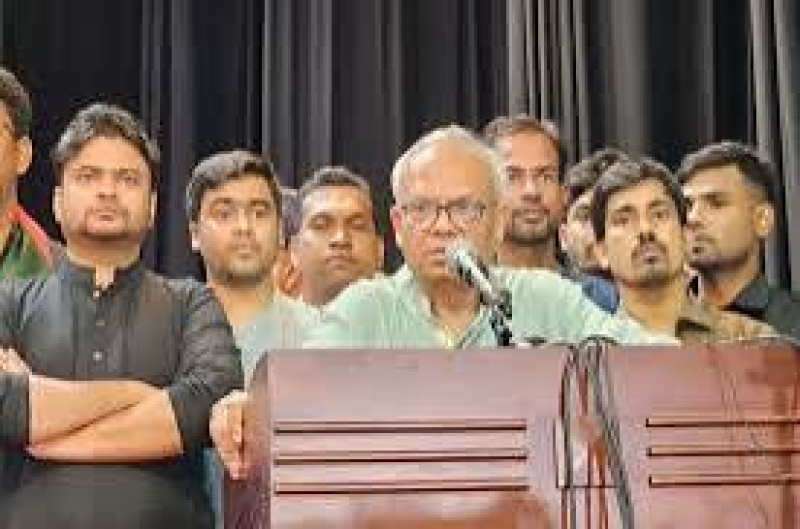
Veteran BNP leader Ruhul Kabir Rizvi today said that the July Uprising was not led by any particular individual or group - rather it was driven by the sacrifices of ordinary people.
“Some 15 to 20 rickshaw pullers were killed during the movement. 95 workers also lost their lives. In other words, it was a massive uprising of the people as a whole,” he said.
Rizvi made the remarks at a discussion organised by the Dhaka University Sada Dol and the University Teachers’ Association of Bangladesh (UTAB) at the Nabab Nawab Ali Chowdhury Senate Building of Dhaka University on Saturday, marking the second anniversary of the 2024 July mass uprising.
Rizvi said the July uprising was the culmination of 17 years of continuous struggle, stressing that the people of Bangladesh do not tolerate injustice and oppression indefinitely.
“At one point, the people rose up in resistance against aggressive and colonial forces,” he said, adding that the July mass uprising was the ultimate outcome of that long-standing resentment and struggle.
He said the country must move forward by upholding the aspirations of the people that emerged through the uprising.
He also said the statements of those who are now adopting a softer tone and suggesting that things were better during the tenure of Sheikh Hasina should be carefully examined.
He further said the sacrifices made during July, the history of the Liberation War and the country’s sovereignty cannot be viewed in isolation from one another, reports UNB.
“We must remember that the people of this country have never tolerated injustice and oppression for long. They have repeatedly stood up against aggression, authoritarianism and colonial attitudes. July was a historic culmination of that long struggle,” the BNP leader said.