

- PM Tarique May Visit India Next Week, Modi Meeting Likely |
- Migrant deaths climb sharply in 2026, new UN data shows |
- Rainfall on the coast due to the effect of a low pressure |
- Planting Krishna chura and Sonalu plants on roads to enhance Kuakata’s beauty |
- Rizvi Named Acting BNP Secretary General After Fakhrul Resigns |
Khaleda Zia: An unyielding voice for Bangladesh's democratic journey
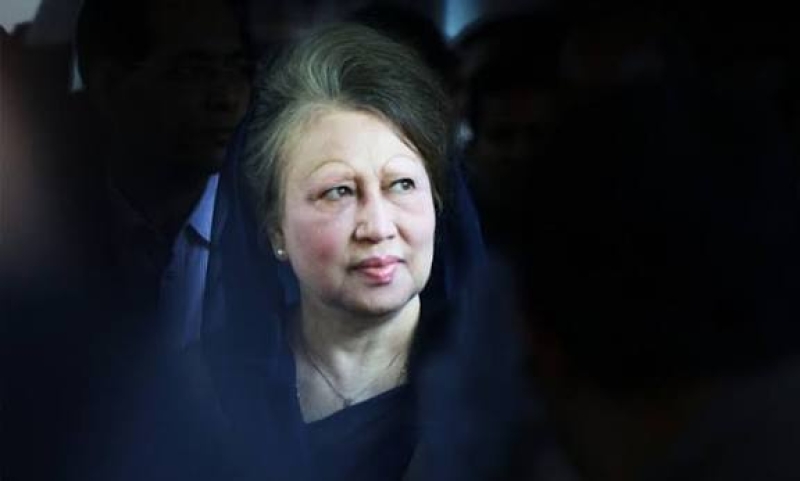
The evolution of multi-party democracy in this South Asian nation remained in its due course for decades as late Begum Khaleda Zia steered Bangladesh Nationalist Party (BNP) with her prudent but uncompromising leadership in a tricky political landscape.
Marking her 82nd birthday on August 15, the nation will honour the late, uncompromising leader, without whom the country's parliamentary and multi-party democracy might never have flourished and strengthened.
The emergence of the Zia family in Bangladesh's politics unfolded amid a series of dramatic events. The journey began with the political turmoil of 1975, under the charismatic leadership of Shaheed President Ziaur Rahman, who founded the BNP on September 1, 1978.
Against the backdrop of several dramatic and bloodstained incidents, Ziaur Rahman emerged in the helm of affairs of the country to build a nation founded on economic prosperity and social and cultural stability, based on Bangladeshi nationalism by embracing people from all walks of life, irrespective of cast and creed.
His assassination by a vested quarter on May 30, 1981 in the port city of Chattogram had plunged the country into a deep leadership crisis and in that void she made her debut in politics or rather apparently was compelled to enter into the political arena, a world of which she was largely unfamiliar with.
During her over four decades of political career she was elected thrice as country's prime minister and earned the status of being the world's second Muslim head of the government.
She took the helm of the BNP at a critical time when it seemed the party's political journey would end as it had just truly begun.
When she became the BNP chief in 1984, it was only a five-year-old party while many were to some extent speculative about its new chairperson. Moreover its ouster in the 1982 coup staged by subsequent military ruler General HM Ershad exposed BNP largely to a state of political wilderness.
Her nearly four-decade political journey, however, was far from a bed of roses.
But BNP's choice of Begum Zia as its top leader soon proved worthy as she consolidated the party and led it in waging a protracted campaign against the Ershad regime.
From the very onset Ershad's takeover, she was opposed to his rule and her stubborn protest until the fall of the regime earned her the title "uncompromising leader" among the BNP rank and file and ordinary people.
Under her leadership stewardship, a BNP-led seven-party alliance was formed while a 15-party alliance was floated under now disbanded Awami League president and deposed premier Sheikh Hasina's oversight to wage a simultaneous campaign against the Ershad regime.
Begum Zia's first appeared before a major pubic rally in front of her BNP office on September 30, 1983 to the massive applause by party activist and supporters.
On October 28 the same year she led an "encirclement" campaign of Bangladesh Secretariat, the hub of countries central administration, which was quelled by police and she was kept under house arrest for a brief period.
In subsequent years she led the seven-party movement in person on the street enforcing a series of programmes like "Demand Day", "Mass Resistance Day" and "Direct Action" through calling general strikes, or "gherao" campaigns defying security bans and stern police actions in the capital and elsewhere in the country.
These resulted in Zia's house arrest again in 1985.
The simultaneously campaigns by Begum Zia-led seven-party and the other alliance Ershad decided to hold a presidential election in 1986 and both alliances and left-leaning five-party coalition after initial consultations decided to boycott the polls.
But Awami League along with Communist Party of Bangladesh (CPB) and six other parties including Jamaat-e-Islami eventually joined the election while Begum Zia's BNP-led alliance remained stick to the boycott decision.
Ershad regime again put her under house arrest ahead of the March 1986 election, believed to widely rigged, reinstalling Ershad as the President under the then presidential form of government as his Jatiya Pary nominee.
Begum Zia's popularity soared after she boycotted the 1986 polls.
After the fall of Ershad regime on December 6, 1990, a caretaker government headed by Chief Justice Shahabuddin Ahmed was constituted under a consensus proposal of Begum Zia- and Sheikh Hasina-led alliances and the five-party coalition.
Acting President Shahabuddin's government staged the general election on February 27, 1991 and BNP emerged as the majority party and she became the first woman prime minister in Bangladesh and second Musim premier in the world. She was 35-year-old at that time.
The new parliament under her leadership amended the Constitution switching the county to parliamentary system from presidential form of government and Begum Zia became the first woman prime minister in Bangladesh.
The 1991 government under her leadership is largely evaluated as a period of significant democratic restoration when the government also opted for market-driven economic reforms and made compulsory the universal primary education allocating highest budget for the sector.
But the late premier possibly would be remembered as well particularly for promoting women's education taking several steps to encourage girls' enrolment in schools.
BNP was reelected to power in 1996, for brief tenure as the Awami League staged vigorous street campaigns demanding caretaker system for polls oversight, while Begum Zia's government quit after introducing the system to oversee elections by a neutral, non-partisan caretaker government.
A fresh election under a caretaker government in 1996 saw the swap of power when Begum Zia assumed her new role as the leader of opposition in parliament until 2001 elections when her party won and she became the prime minister again and delivered as the premier until its scheduled tenure until 2006.
In line with the newly amended Constitution, she handed over power on October 29 to a caretaker government led by President Iajuddin Ahmed.
Talking the advantage of a political turmoil the military intervened in an event dubbed "1/11"and forced the reconstitution of the caretaker government, which actually emerged as an army-backed interim administration that ran the country for the subsequent two years.
The military-backed caretaker government sent her to jail, her elder son incumbent Prime Minister Tarique Rahman to long-term exile in London, and her younger son Arafat Rahman Koko to Thailand and later Malaysia, where he passed away in 2015.
During the period, pressures were mounted on Begum Zia to leave the country, but she declined to succumb, saying Bangladesh is her only home and she had no second home abroad.
Since then, she has endured an extreme level of state-sponsored repression, but never bowed her head before anyone, manifesting her uncompromising leadership.
Amid spontaneous opposition boycotts from parliament and intense street protests led by the Awami League, the sixth parliament under her leadership passed the 13th constitutional amendment in March 1996.
But during the subsequent government Awami League the Supreme Court declared the system unconstitutional and the government scraped got it scrapped in parliament, despite its previous desperate campaign for the system.
Begum Zia strongly opposed the decision, arguing it ruined fair electoral practices in Bangladesh and later, at a press conference termed the Supreme Court verdict as biased and unacceptable.
During the 15 years of deposed prime minister Sheikh Hasina-led government, she endured severe repression and harassment, including eviction from her cantonment home, imprisonment and prolonged confinement, which national and international human rights groups described as politically motivated persecution.
Several analysts said the motive behind the state-sponsored harassment was aimed to sideline her from politics.
But eventually Awami League regime was exposed to a massive public outrage centering a student movement on quota issue in government jobs, resulting in its ouster from power in August 5, 2024, when Sheikh Hasina along with most party stalwarts and cabinet ministers fled the country.
The movement dubbed July Uprising paved the path for BNP to return to the state power in 2026 under Begum Zia's only surviving offspring Tarique Rahman's leadership.
At a time when the people were hopeful that Begum Zia, with her broad-based and widely accepted leadership, would help bring the entire nation together, she answered the call of eternity on December 30, 2025 after prolonged ailments.
The entire nation remembers Khaleda Zia with due respect and seeks eternal peace for the departed soul on the occasion of her 82nd birthday on August 15, reports BSS.