

- Bangladesh Eyes Smarter Future With AI-Driven Services |
- Dhaka’s air quality has been recorded ‘moderate’ on Saturday |
- Bailey bridge collapse disrupts direct Dhaka link to Chandpur |
- No role to play in Hasina presser, Not endorse what was said: Delhi |
- Saudi, Turkey, Pakistan sign ‘Mecca Joint Defense Agreement’ |
Scientists Use Sharks To Improve Hurricane Forecasts
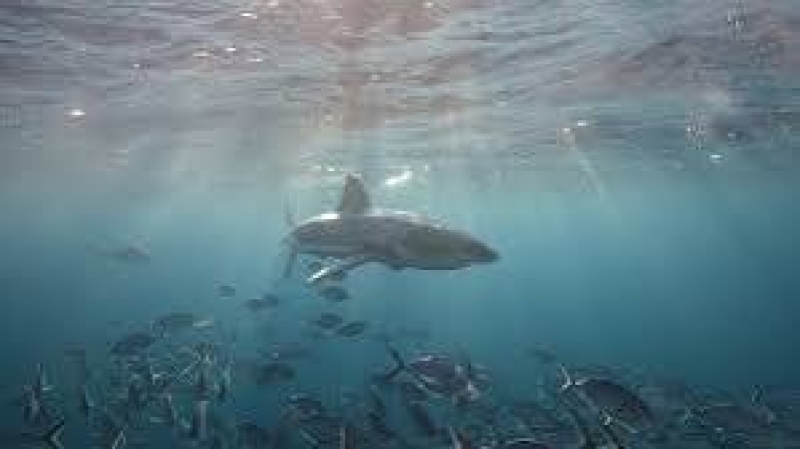
Scientists are turning to sharks for help in improving hurricane forecasts by using sensor-equipped animals to collect real-time data on ocean conditions.
Researchers at the University of Delaware are testing whether sharks can serve as mobile ocean-data observers, carrying sensors that measure temperature, salinity and depth. The information could help improve oceanographic, atmospheric and climate models and provide better estimates of hurricane intensity.
The small electronic devices, known as CTD tags, measure electrical conductivity, which is closely linked to salinity, as well as water temperature and depth while the sharks swim and dive.
"Animal-borne sensors have been used successfully by oceanographers for years," said Aaron Carlisle, the project's principal investigator and a professor at the university's School of Marine Science and Policy.
He said sharks offer a promising new opportunity because they are widely distributed, relatively abundant and easier to access than many protected marine mammals.
Traditional shark tagging has mainly focused on tracking the animals' movements and habitats. The researchers are now selecting species that can collect data useful for hurricane research and surface frequently enough for their tags to transmit information to satellites.
Previous research identified shortfin makos, blue sharks, smooth hammerheads and juvenile great white sharks as promising candidates in the North Atlantic.
The researchers are particularly interested in the heat content of the ocean's upper layer, known as the mixed layer. Warmer water in this layer can provide more energy to hurricanes and contribute to stronger storms.
"The heat content of the top layer of the ocean ... drives hurricane intensity," Carlisle said, explaining that a warmer mixed layer can fuel stronger hurricanes.
The tagging programme begins in early May, when highly migratory shark species move closer to the US East Coast after spending the winter farther offshore, according to Caroline Wiernicki, a University of Delaware doctoral candidate in marine science.
Researchers travel 50 to 65 kilometres offshore aboard a research vessel, deploy baited lines and typically wait two to three hours for a shark to take the bait.
The sensors are attached to the sharks' dorsal fins. When a tagged shark surfaces, the device transmits the collected data to satellites.
The tagging process usually takes less than five minutes and is conducted under animal-care oversight to minimise stress and potential harm. The tags are designed to corrode and eventually detach, while each shark undergoes a health check before being released.
If the project proves successful, data collected by sharks could help scientists produce more reliable forecasts of hurricane strength as storms approach the US East Coast.
Researchers hope the improved forecasts could help communities from North Carolina to Massachusetts prepare for increasingly powerful storms and strengthen coastal resilience.
Carlisle said the project could also help change public perceptions of sharks by demonstrating their value to scientific research.