

- Ruhul Kabir Rizvi Named BNP Acting Secretary General |
- Over 770 US Service Members Killed or Injured in Iran War |
- Mirza Fakhrul Elected Bangladesh’s 23rd President |
- Fakhrul Dreams of a Happy, Prosperous Bangladesh |
- Trump vows 'tremendous' economic costs on Iran partners |
Rare ‘Blood Moon’ to Appear After Total Solar Eclipse
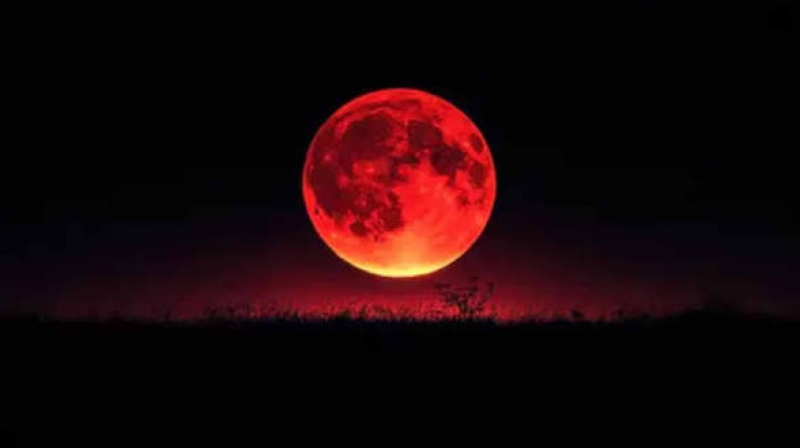
A rare lunar eclipse is set to occur later this month, following the recent total solar eclipse, with about 96% of the Moon expected to pass through Earth’s dark central shadow.
The partial lunar eclipse will take place on August 27-28, creating a striking reddish-orange glow that could make the Moon appear like a “blood moon.”
The eclipse will be visible across most of North and South America, except parts of Hawaii and Alaska. It will also be visible from parts of Europe and Africa during the early hours of August 28.
At the peak of the eclipse, around 96% of the Moon will enter Earth’s darkest shadow, known as the umbra. Although the Moon will not be completely covered, its illuminated portion is expected to take on a deep red or orange hue.
The remaining part of the Moon will pass through Earth’s lighter outer shadow, known as the penumbra, potentially leaving its northern edge with a silvery appearance.
According to astronomers, the eclipse will reach its maximum at 12:13am EDT on August 28.
The reddish colour occurs because sunlight passing through Earth’s atmosphere is refracted and reaches the Moon during the eclipse. This phenomenon gives the Moon its characteristic red or orange appearance.
As much of the Moon becomes dark during the eclipse, stars and the Milky Way may also become more visible in the night sky, offering observers a striking celestial spectacle.
For viewers in the Americas, the event is expected to be one of the deepest lunar eclipses visible before the total lunar eclipse on June 26, 2029.