

- Govt Appoints Indonesian Firm to Operate Cox’s Bazar SPM |
- ADB lowers Bangladesh’s growth forecast to 4 % in FY2027 |
- El Niño Tests Global Readiness for a Changing Climate |
- Dhaka's air quality recorded moderate on Wednesday morning |
- Dhaka, Riyadh ties continue to develop across numerous fields: Envoy |
AI Threatens to Deepen Inequality for Indigenous Peoples
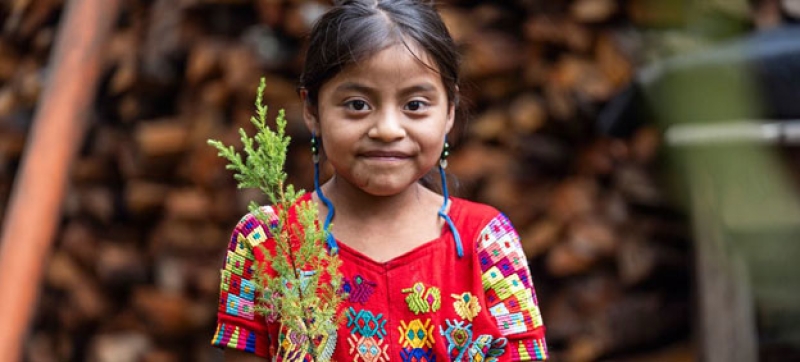
Although the advancement of artificial intelligence (AI) yields numerous opportunities for progress—such as improved efficiency, enhanced decision-making, and innovative tools for climate reform—it also poses new risks for Indigenous peoples. With AI rapidly transforming the world, it is imperative to establish ethical and equitable frameworks that prioritize inclusivity and work to narrow the digital divide.
On August 8, the United Nations (UN) commemorated the International Day of the World’s Indigenous Peoples (August 9). This year’s theme, Indigenous Peoples and AI: Defending Rights, Shaping Futures, raised the question of how AI can be used to empower Indigenous communities. During last week’s event, Indigenous speakers, civil society groups, and humanitarian experts underscored the new risks of “exclusion, marginalization, and appropriation” of Indigenous cultures, data, land, and identities.
“Indigenous peoples are guardians of ancient knowledge, defenders of cultural heritage, stewards of biodiversity, and essential to our shared future,” said UN Secretary-General António Guterres. “AI can preserve Indigenous languages and oral histories, map ancestral lands, and amplify Indigenous wisdom to fight climate change. But without meaningful participation from Indigenous peoples, these same technologies risk perpetuating old patterns of exclusion, misrepresenting cultures, and violating fundamental rights.”
Today, most AI systems are developed without meaningful involvement from Indigenous peoples and remain largely inaccessible to them, despite these communities often being among the most adversely affected. With the majority of AI systems developed from Eurocentric perspectives, they risk misrepresenting or discriminating against Indigenous identities, contributing to the loss of languages and cultures.
“AI trained on biased data can erase Indigenous peoples’ languages, reinforce stereotypes, and misrepresent our identities. Digital platforms already spread disinformation and enable cultural appropriation without safeguards. AI risks becoming a new form of colonization, coded into algorithms that shape our lives,” said Aluki Kotierk, current chair of the UN Permanent Forum on Indigenous Issues.
According to the UN, AI systems that employ biometric technologies such as facial recognition software risk misidentification and racial profiling of Indigenous peoples.
Indigenous activist Moi Guiquita remarked, “AI is not neutral,” noting that it has been used to monitor Indigenous communities, criminalize leaders, and favor “extractivist corporations and governments” that exploit Indigenous resources.
“The question is not how we use AI but who designs it, with what ethics, and what participation of Indigenous peoples,” said Guiquita.
Under international law, Indigenous peoples are entitled to Free, Prior, and Informed Consent (FPIC), which affirms their right to self-determination and to approve or reject any activities that impact their land, resources, or cultural heritage. They have also historically called for the right to govern their own data—an area that significantly overlaps with the development and use of AI systems.
Data sovereignty is of utmost importance to Indigenous communities as it accurately reflects their culture, languages, and resources—all of which are at risk of exploitation by invasive AI-driven algorithms. This is particularly damaging to communities that speak endangered languages, which have been systematically erased from mainstream representation by state school programs. According to Danielle Boyer, an Ojibwe robotics inventor and Indigenous rights activist, the only way to preserve and respect these languages is to ensure Indigenous representation in AI governance and development.
“AI language models are being built for Indigenous languages without community consent, often with poor accuracy and trained using data scraped from the internet,” said Boyer. “Non-Indigenous authors are using AI to write children’s books about our languages and cultures, getting it wrong and misrepresenting us in the process. Even ChatGPT can generate fake words in my language, threatening to distort our knowledge rather than preserve it. We need to fight back by developing our own technologies through our own communities and standing up against the harm that can be perpetuated in our own spaces.”
Additionally, AI systems require vast amounts of electricity and water, which threaten to deplete Indigenous lands of natural resources and exacerbate environmental degradation and climate change. The increased extraction of minerals from Indigenous lands for electronics also drives Indigenous peoples away from their homes, threatening cultural heritage and livelihoods.
Recently, the Atacameño peoples in Chile have resisted AI-driven extraction of lithium and copper, as these operations threaten to damage culturally important lands and water sources in the Atacama Desert. Furthermore, AI-driven operations also generate substantial electronic waste. When data centers are situated near Indigenous settlements, they risk dumping hazardous substances such as mercury and lead, which can cause adverse health effects, particularly for Indigenous women.
According to Pyrou Chung, director of the East West Management Institute’s programs on natural resources, land, and data initiatives in Southeast Asia, much of today’s climate change and environmental protection work is not framed around Indigenous perspectives, making it largely ineffective in tackling environmental issues occurring on Indigenous lands.
“These agendas are often driven by larger powers. Therefore, some of these narratives reflect colonial power imbalances,” said Chung. “This leads to investments in technologies that represent reductionist views rooted in imperial Western science. The re-appropriation of Indigenous knowledge in ecosystems is leading to systemic harm.”
“While nature-based solution narratives legitimize these solutions as environmentally equitable and inclusive, at the heart of these approaches is the commodification of environmental systems through carbon financing, biodiversity credits, and other schemes—when the economic benefits are not equitably shared.”
Despite these risks, many speakers at the event underscored the potential benefits of AI-driven initiatives, provided they dismantle systemic barriers facing Indigenous communities, establish effective frameworks to protect their cultures, and invite Indigenous voices to represent themselves in AI governance. Currently, Indigenous communities are using AI to monitor climate change and deforestation and to transfer knowledge between generations to preserve and revitalize their culture.
“We have a great opportunity,” said Fernando Marini, Program Director of Justice, Inclusion and Equality at the NYU Center on International Cooperation. “With the implementation of the global digital compact and all the initiatives ahead of us, we need participation from everyone—civil society, the private sector, governments—but in particular Indigenous peoples and leaders. The UN is a great avenue to bring those forces to the table.”