

- EU Deploys 56 Long-Term Observers Across Bangladesh |
- Appeals over nomination papers:18 more regain candidacies back |
- More than 100 dead in torrential rains and floods across southern Africa |
- Islami Andolan to Contest Election Alone in 13th Poll |
- 3 killed in Uttara building fire; 13 rescued |
Will AI Kickstart a New Era of Nuclear Power?
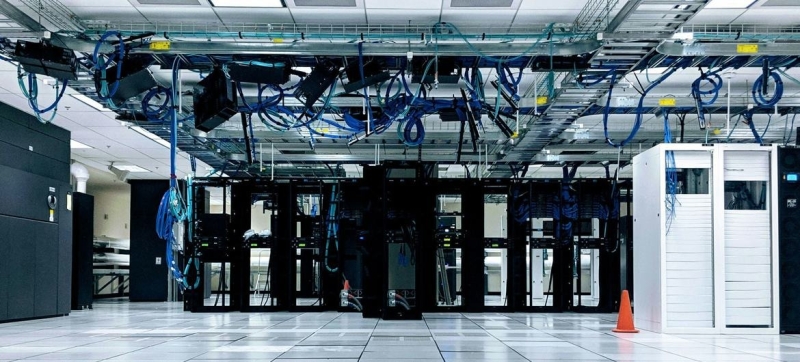
In a data centre, servers are high-performance computers that process and store data.
The rapidly expanding global use of artificial intelligence is placing immense pressure on electrical grids, and many experts believe that meeting this demand without worsening the climate crisis will require a major expansion of nuclear energy.
Global electricity demand is rising at a staggering pace. By 2035, it is expected to increase by more than 10,000 terawatt-hours—equivalent to the total electricity consumption of all advanced economies today.
Artificial intelligence is a major driver of this surge. AI systems rely heavily on data centres, and the electricity consumption of a medium-sized data centre is comparable to that of around 100,000 households. According to the International Energy Agency, electricity demand from data centres increased by more than three-quarters between 2023 and 2024 and is expected to account for over 20 percent of electricity demand growth in advanced economies by 2030.
In the United States, home to many leading AI companies, electricity consumption from AI-driven data processing is projected to exceed the combined power use of aluminium, steel, cement, and chemical production by the end of the decade.
In December last year, policymakers, technology firms, and nuclear industry leaders from around the world gathered at the International Atomic Energy Agency headquarters in Vienna to examine how nuclear power could support the expansion of AI and how AI, in turn, could drive innovation within the nuclear sector.
Training advanced AI models requires tens of thousands of central processing units to operate continuously for weeks or even months. Meanwhile, the everyday application of AI is spreading rapidly across sectors including healthcare, public administration, transportation, agriculture, logistics, and education.
Every query, simulation, and recommendation consumes electricity. “We need clean, stable, zero-carbon power that is available around the clock,” said Manuel Greisinger, a senior manager at Google focusing on AI. “This is an extremely high bar and cannot be met by wind and solar alone. AI is the engine of the future, but an engine without fuel is almost useless. Nuclear energy is not just an option; it is an indispensable core component of the future energy system.”
Bullish outlook for nuclear energy
This view is shared by IAEA Director General Manuel Grossi, who believes the nuclear industry is poised to become a key energy partner of the AI revolution. “Only nuclear energy can meet the five requirements of low-carbon generation, round-the-clock reliability, ultra-high power density, grid stability, and true scalability,” he said.
The nuclear industry is showing renewed momentum. Seventy-one new reactors are currently under construction worldwide, adding to the 441 already in operation. In the United States, which has 94 reactors—the highest number of any country—ten new units are planned.
Major technology companies operating data centres have pledged to support the goal of tripling global nuclear power capacity by 2050. Microsoft, for example, has signed a 20-year power purchase agreement that enabled Unit One of the Three Mile Island nuclear power plant in Pennsylvania to be restarted.
Other regions are also increasing investment in nuclear energy as AI demand grows. Europe, with dense digital corridors centred on Frankfurt, Amsterdam, and London, is expanding capacity, while traditional nuclear powers such as France and the United Kingdom are accelerating construction. Emerging economies, including Poland, are also moving forward.
Russia remains the world’s largest exporter of nuclear technology and a leading developer of advanced reactors, while China is making rapid progress in both artificial intelligence and nuclear energy. “AI development and the construction of data centres are advancing simultaneously, and the number of new nuclear reactors globally is also at a historic high,” said the UN nuclear agency chief.
Japan is investing heavily in expanding and upgrading data centres, while in the Middle East, the United Arab Emirates has established a nuclear energy programme and emerged as a regional hub for AI.
Are small reactors the answer?
The urgent need for large amounts of energy is also driving interest in small modular reactors, which differ significantly from traditional large-scale plants that require massive investment and lead times of around 10 years.
“These reactors have a small footprint, enhanced safety systems, and can be deployed near industrial zones, including data centre campuses,” Mr. Grossi said. Using such reactors would allow technology companies to avoid grid constraints and transmission losses, offering a significant advantage in regions where grid upgrades are slow.
Although small modular reactors are still moving beyond the research and development phase, the IAEA is working closely with regulators and industry players to make them commercially viable. Large-scale deployment could begin in the coming years.
Google has already signed an agreement with an energy company to purchase power from multiple small modular reactors—the first deal of its kind globally. If successful, these reactors could become operational by 2030.
The company is also exploring space-based solar power, investigating orbital solar networks to support large-scale machine learning using uninterrupted solar energy. Two prototype satellites are scheduled for launch in early 2027 to test radiation resistance and data processing in space.
Whether through space-based solar power, restarting existing reactors, deploying small modular reactors, or building new large plants, the direction is clear: an energy system increasingly anchored in nuclear power to support the demands of future societies.