

- A New Arms Race is Threatening to Take-off—Now in Outer Space |
- Equality ‘ends at doors of Security Council’, Kenya’s Ruto at UNGA |
- কলাপাড়ায় প্রাথমিক শিক্ষায় হ-য-ব-র-ল |
- BDRCS and IFRC scale up dengue response to reach 300,000 people |
- World leaders approve new declaration to tackle rising sea levels |
New device lets scientists watch plants breathe live
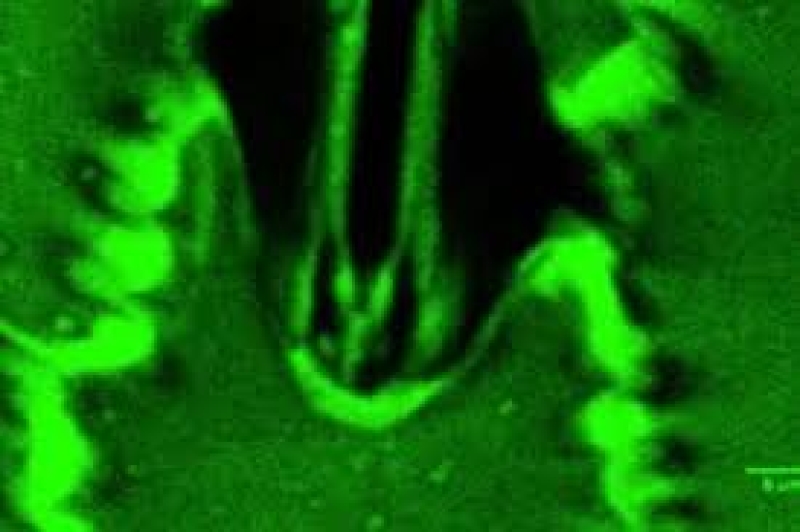
Scientists have, for the first time, developed a technology that allows humans to watch plants “breathe” in real time, a breakthrough that could help create stronger and more drought-resistant crops.
Researchers at the University of Illinois Urbana-Champaign have built a device called “Stomata In-Sight” that makes it possible to directly observe how tiny pores on plant leaves, known as stomata, open and close to regulate the exchange of carbon dioxide, oxygen and water vapour.
For centuries, scientists have known that plants absorb carbon dioxide and release oxygen and water vapour through these microscopic pores. However, the process had never before been observed live and in such fine detail.
The new system combines a high-resolution confocal microscope, a precise gas-exchange measurement setup and machine-learning software to analyse images. During experiments, small sections of leaves are placed inside a palm-sized chamber where temperature, humidity, light, carbon dioxide levels and water supply can be carefully controlled.
Using the device, researchers recorded videos showing how gases move as plants absorb carbon dioxide for photosynthesis and release oxygen and water vapour. The system also tracks subtle cellular changes as stomata respond to light, heat and humidity.
Scientists say the breakthrough could transform crop research by helping identify genetic traits linked to better water-use efficiency. This is seen as crucial at a time when water scarcity and rising temperatures pose major threats to global food production.
The University of Illinois Urbana-Champaign has patented the technology and hopes it will soon be manufactured for wider scientific use. The findings have been published in the journal Plant Physiology, reports UNB.