

- Stocks surge at DSE, CSE for second straight day |
- REHAB seeks Tk 3000 crore special fund support housing sector |
- Trump, Putin discuss Iran conflict, Ukraine settlement in phone call |
- US Launches ‘Most Intense’ Strikes as Iran Vows Response |
- Family Card Scheme to Cover 4 Crore Families in 5 Years |
AI Opens New Doors for Young Filmmakers Chasing Oscars
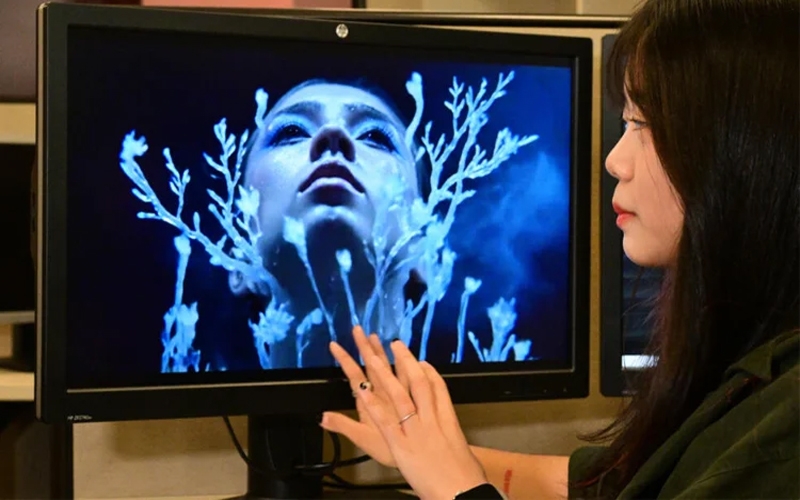
Artificial intelligence is creating new opportunities for young filmmakers, offering them tools to produce ambitious films with limited budgets and potentially reach global audiences.
SiJia Zheng, a 29-year-old film student from China studying at the University of Southern California’s School of Cinematic Arts, dreams of one day winning an Academy Award. Recent advances in AI have made that goal feel more achievable.
“AI gives beginners like me a chance to make a film and show the world that we have the ability to direct,” Zheng said.
The USC film school has long been a training ground for talent that later joins major studios such as Pixar and DreamWorks. Students like Zheng are now exploring how AI can reshape filmmaking, particularly in animation.
As part of his studies, Zheng created a seven-minute short film titled Torment, a thriller about a masked killer targeting a high school. The entire project was produced using AI in just one week.
Using a green screen, Zheng recorded himself performing multiple roles and then used AI software to transform his appearance into different characters. The technology also allowed him to create scenes set in an Asian school and a swimming pool—settings that would have required large budgets with traditional filming.
The film was later recognised at the LA Shorts film festival.
For many students, AI offers a way to overcome financial barriers in filmmaking. “As a student, it’s impossible to afford those kinds of production costs,” Zheng said.
However, the growing use of AI remains controversial within the film industry. The technology was one of the major issues behind the Hollywood writers’ and actors’ strikes in 2023.
Some prominent filmmakers remain strongly opposed to it. Director Guillermo del Toro has openly criticised AI in filmmaking, arguing that traditional craftsmanship should remain at the heart of cinema.
Despite the debate, many young filmmakers see AI simply as another creative tool. Zheng said the technology can reduce costs but cannot replace imagination or storytelling skills.
“AI is just a tool,” he said. “It can help people become better filmmakers.”
The Academy of Motion Picture Arts and Sciences has taken a neutral stance on the technology. Updated guidelines released last year stated that the use of generative AI tools neither improves nor harms a film’s chances of receiving an Oscar nomination.
At USC, instructors are also trying to address ethical concerns related to AI. Animation professor Debra Isaac said responsible use of the technology is key, especially after an AI-generated video depicting actors Brad Pitt and Tom Cruise in a fictional fight circulated online without their consent.
According to Isaac, ethical AI filmmaking involves much more than simply typing prompts into software. Many artists train AI systems using their own artwork and creative materials.
One example is Xindi Zhang, a recent USC graduate who won a Student Academy Award for her short film The Song of Drifters. For the project, she fed dozens of her own drawings into an AI system, which then helped generate visual styles for scenes set in different cities.
By using AI in this way, Zhang was able to complete a project that might otherwise have taken years to produce.
As the technology continues to evolve, many young filmmakers believe AI could reshape the future of cinema, making film production more accessible while still relying on human creativity at its core.