

- USS Warrior Arrives in Chattogram for CARAT Bangladesh 2026 |
- Garment Workers’ Protest Shuts Five Metro Rail Stations |
- Govt Forms Six-Member Wage Board for Garment Workers |
- Dhaka ranks 4th among world's most polluted cities this morning |
- Dhaka Launches Company-Operated Buses on Six Routes Today |
Gangamoti Girder Bridge in Kuakata: Parking zone for tourist vehicles
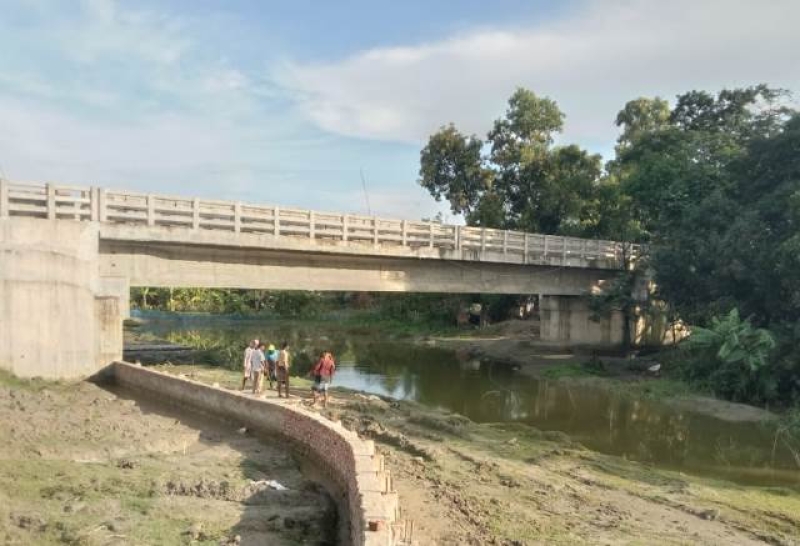
Gangamoti Girder Bridge in Kuakata.jpg
Patuakhali: A 30-meter-long girder bridge is being constructed at Gangamoti Beach in Kuakata to facilitate access for tourists. Once operational, the bridge will allow tourists to reach Gangamoti Beach directly by vehicle. Simultaneously, it will bring relief to over 1,500 people living outside the embankment, who have endured transportation hardships for 40 years. For the local fishing families in particular, the bridge will simplify daily travel and provide a clear route to reach safe shelter during natural disasters, such as cyclones.
The main construction of the bridge, which cost 31.56 million BDT (3 crore 15 lakh 59 thousand taka), has already been completed. Work on the connecting roads is currently underway, and the relevant authorities expect the bridge to be opened by this coming December. Additionally, an aesthetically designed parking zone for tourist vehicles is being developed in a 55-meter area adjacent to the embankment on both sides of the bridge.
During a site visit on Sunday afternoon, local residents were seen bathing in the Gangamoti canal, which flows beneath the bridge. 50-year-old Hamid Biswas, who has lived outside the embankment on the southern bank of the canal for about 40 years, explained that the canal connects to the Gangamoti Lake. Currently, the canal holds 3 to 4 feet of water, which locals use for bathing and cooking; some have even built dams across the canal for fish farming.
Recalling the horrors of Cyclone Sidr, Hamid Biswas shared that during the storm, his two-year-old nephew, Zahid, was swept away from his parents' grasp by the powerful current and lost his life. At that time, everyone was attempting to swim toward the safety of the embankment. Had the bridge existed then, such a tragic incident might have been avoided.
He further noted that more than 1,500 people—including approximately 600 registered voters and at least 400 fishing families—reside outside the embankment. The opening of the bridge will resolve their long-standing transportation challenges.
Rakibul, a seven-year-old first-grade student from the area, mentioned that during the monsoon season, when the water level in the canal rises, traveling to school becomes extremely difficult. Often, it is not possible to attend school. Once the bridge is operational, commuting will become much easier.
Local residents Musa Biswas, Md. Mohsin, and Md. Delwar Hossain are also awaiting the opening of the bridge. In their view, its inauguration will bring an end to nearly four decades of hardship. However, Mizanur Rahman alleges that certain individuals opposed the bridge's construction, spreading false claims that there was no canal or connecting road. They even questioned the justification for building the bridge, which cost several crore taka.
The opening of the bridge will also add a new dimension to the tourism infrastructure in Kuakata. Currently, while one can travel along the beach from Kuakata Zero Point westward to Lemburbon, reaching Gangamati Beach involves significant inconvenience for tourists. Once the new bridge is operational, it will be possible to access the beach directly from the area near '33 Kani,' providing an alternative route for visitors.
For the local population, the bridge holds even greater importance. During the monsoon season, the water level in the Gangamati canal can reach 5 to 8 feet. Consequently, those living outside the embankment face immense difficulty crossing the canal to reach the area within the embankment—a challenge that becomes particularly critical during cyclones or tidal surges, when reaching a safe shelter quickly is essential. The bridge will go a long way toward resolving these issues.
According to the Kalapara Upazila Engineer’s office, the work order for the bridge—constructed at a cost of 31.56 million taka—was issued on August 17, 2021. Although the contractor, Md. Mohiuddin Ahmed, began construction, work came to a halt after 2024. Recently, construction of the connecting road has resumed. Furthermore, plans are in place to soon begin the development of an existing 1,200-meter road that leads toward the seaside to the south, beyond the bridge.
Md. Moniruzzaman, the Kalapara Upazila Engineer (LGED), stated that the bridge was built to support the development of Kuakata, based on practical necessity. Once opened, it will allow tourists to easily access another attractive spot along the beach. Additionally, the population living outside the embankment will be able to travel into the area protected by the embankment much more easily. During the monsoon season, the canal holds between 5 and 8 feet of water, making the bridge vital for the local community.
Locals anticipate that the opening of the bridge will further boost the tourism potential of Kuakata. It will also alleviate long-standing connectivity challenges for hundreds of fishing families and reduce their vulnerability during disasters. However, they have urged for effective measures—such as re-excavating the canal and preventing illegal encroachment—to ensure the long-term benefits of the bridge. Otherwise, there is a risk that the silted-up canal could be taken over by encroachers. - Gofran Palash