

- Hasina Seeks New Passport and NID to Return to Bangladesh |
- Iran threatens to rain down hell if US escalates war |
- Maintain pol. neutrality in admin. duties: PM tells BCS officers |
- 4 mother, child welfare centres in Jhenaidah in limbo for 8yrs |
- UN chief saddened by Krakow shooting killing 6, injuring many |
Govt Plans Integrated Transport System for Dhaka
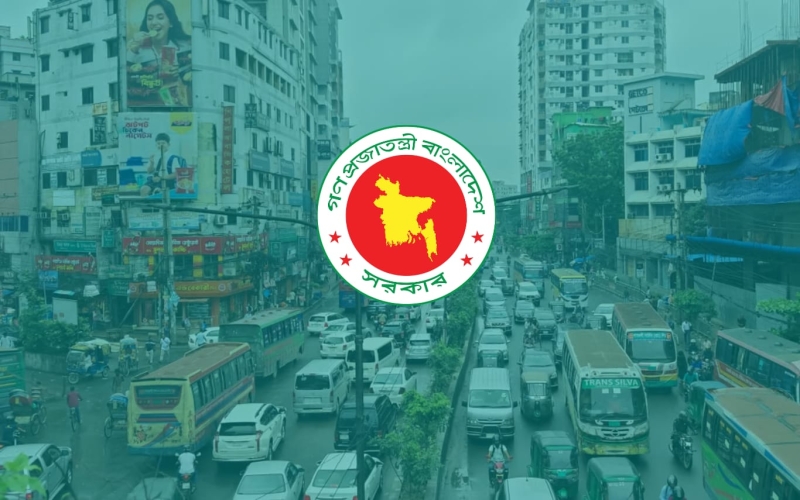
The government is pursuing a range of initiatives to transform Dhaka into a model city with a modern, environment-friendly and integrated transport system.
It is taking short-, medium- and long-term measures to ease chronic traffic congestion, bring discipline to public transport, improve passenger services and ensure safer travel across the capital.
Under the direction of Prime Minister Tarique Rahman, the government and relevant authorities are working on plans to modernise the city's transport system.
Key proposals include introducing pink buses to improve women's safety, expanding the use of electric buses, improving connections between metro rail and other modes of transport, assessing the feasibility of monorail services in important areas, and formulating policies and regulations to promote environment-friendly public transport.
Other priorities include ensuring uninterrupted travel during the monsoon, introducing digital bus management, developing charging infrastructure and improving passenger services.
The overall objective is to reduce dependence on private cars and make public transport safer, more affordable, reliable and environmentally sustainable. The government hopes to develop an integrated transport network that can support Dhaka's needs as a modern urban centre.
Dhaka is the country's principal centre for administrative, economic and commercial activities. Every day, millions of people travel to workplaces, educational institutions, hospitals, businesses and government offices. However, transport infrastructure and management have failed to keep pace with population growth and expanding economic activities, making daily travel increasingly difficult.
The city's long-standing public transport problems include severe traffic congestion, disorderly bus operations, irregular passenger boarding and disembarking, overcharging, a lack of fixed schedules, safety concerns for women and air pollution.
The movement of buses, private cars, motorcycles, rickshaws, battery-powered vehicles and freight transport on the same roads has worsened congestion in many areas. Illegal parking, encroachment on footpaths and poorly planned bus stops have further complicated the situation.
Against this backdrop, the government is emphasising integrated planning rather than isolated transport projects. Proposed measures include reorganising bus routes, introducing designated stops, enforcing schedules, expanding digital monitoring, developing an integrated ticketing system and improving vehicle standards.
Dr M Shamsul Hoque, a professor in the Department of Civil Engineering at Bangladesh University of Engineering and Technology (BUET), said effective coordination among relevant agencies would be essential alongside the implementation of short-, medium- and long-term plans.
"In the short term, priority should be given to bringing discipline to bus operations, ensuring passenger boarding and disembarking at designated locations, stopping illegal parking and enforcing traffic laws. In the medium term, route restructuring, integrated bus services and improvements in public transport quality are essential. In the long term, metro rail, buses and other transport modes must be connected to develop an integrated public transport network," he said.
He said consistent implementation and accountability were more important than merely adopting plans. Safe mobility for pedestrians, women, children, older people and persons with disabilities, along with transport discipline and air pollution control, should also receive equal attention.
Focus on women's safety
The proposed introduction of pink buses is being considered an important measure to improve safe travel for women in the capital.
Working women and students often face overcrowding, harassment and other safety concerns while using public buses. Expanding dedicated bus services for women could provide them with an additional travel option.
However, ensuring women's safety should not be limited to introducing separate buses. Effective monitoring, complaint mechanisms, training for drivers and helpers, and prompt action against harassment are also necessary across the public transport system.
State Minister for Road Transport and Highways Habibur Rashid Habib said the government was working on an integrated plan to make public transport in the capital safer, more modern, environment-friendly and passenger-friendly.
He said the government had taken steps to introduce pink buses to improve women's safety. Monitoring and complaint-handling mechanisms were also being strengthened to ensure women's security on regular public transport services.
Push for electric buses
Expanding the use of electric buses is another part of the government's transport modernisation plans, particularly its efforts to reduce air pollution in Dhaka.
A shift from fossil-fuel-powered vehicles to electric buses could reduce pollutants emitted directly on the city's roads. However, this would require adequate charging stations at bus depots, major terminals and transport hubs, along with reliable electricity supplies and improved battery management capacity.
A proposal to establish charging facilities around metro rail stations is also being considered as part of the broader transport plan. Passenger movement, emergency access and electrical safety would need to be taken into account when developing such infrastructure.
The state minister said the government planned to increase the use of electric buses to reduce air pollution in Dhaka.
He said the necessary charging infrastructure, reliable electricity supply, battery management and maintenance capacity would need to be developed. The possibility of establishing charging facilities in coordination with metro rail and other public transport services could also be examined.
Transport challenges during the monsoon
Waterlogging and slow-moving vehicles often disrupt public transport in different parts of Dhaka during the monsoon, causing difficulties for commuters, students and people travelling for emergencies.
To address the problem, authorities need to identify waterlogging-prone areas, improve drainage systems, construct bus stops with adequate shelter and keep important roads accessible.
The possibility of introducing alternative transport services in specific areas is also being considered.
Environment-friendly transport policies
Formulating and implementing appropriate laws and policies is another priority in the effort to establish environment-friendly public transport.
Effective enforcement of existing laws and regulations is necessary to ensure compliance with vehicle emission standards, fuel efficiency requirements, fitness tests and environmental standards.
Authorities also need to restrict the operation of highly polluting older vehicles and encourage transport owners to adopt environment-friendly technologies.
Road Transport and Highways Division Secretary Dr Mohammad Ziaul Haque said developing an environment-friendly public transport system and controlling vehicle emissions were essential to reducing air pollution in Dhaka.
He said effective enforcement of existing laws and regulations, regular vehicle inspections and appropriate action against highly polluting vehicles would be necessary.
He added that awareness among transport owners and workers would be increased and coordination among relevant agencies strengthened. A combination of law enforcement, practical planning and regular monitoring could help establish an environment-friendly public transport system, he said.
Connecting different transport modes
Metro rail has opened up new possibilities for improving mobility in the capital. However, its benefits can be maximised only if passengers can conveniently reach their destinations from stations using buses, pedestrian routes, bicycles and other public transport services.
Planned passenger pick-up and drop-off points and designated bus stops near metro stations could help reduce dependence on private vehicles.
The possibility of introducing monorail services in important parts of the capital is also being considered as part of the long-term transport plan. Before implementing such projects, authorities need to assess passenger demand, potential routes, construction costs, land and infrastructure constraints, and environmental impacts.
The road transport secretary said reducing traffic congestion and travel time in the capital remained a government priority. He said the government was working to develop a modern, safe and environment-friendly public transport system, including plans concerning metro rail and the possible expansion of monorail services.
Digital management and coordination
The government is also planning to expand the use of digital technology to modernise public transport.
Such systems could allow passengers to access information about bus locations, estimated arrival times, fares and routes. Digital monitoring would also make it easier to supervise bus operations and service quality.
Route-based bus operations, designated stops, adherence to schedules and driver training could help bring greater discipline to the sector.
Effective coordination among Dhaka North and South City Corporations, the Dhaka Transport Coordination Authority, the Bangladesh Road Transport Authority, traffic police and other relevant agencies will be essential.
Regular monitoring will also be needed to keep footpaths and bus stops free from encroachment, control illegal parking and enforce traffic laws.
Under the proposed approach, short-term priorities include improving bus operations, establishing designated stops, controlling illegal parking and enforcing traffic regulations.
Medium-term measures could include reorganising bus routes, introducing electric buses on a pilot basis, developing charging infrastructure and expanding digital management systems.
Long-term plans include improving connections between metro rail and other public transport services, developing new transport corridors and assessing the feasibility of monorail projects.
Effective implementation, regular progress reviews and accountability among the relevant agencies will be crucial to achieving the expected improvements.
Greater participation by transport owners, workers, passengers, urban planners and environmental experts could also make the initiatives more practical and effective.
Officials and experts believe that if the government's plans are implemented properly, Dhaka could make significant progress not only in reducing traffic congestion but also in developing a modern, integrated and environment-friendly urban transport system.