

- Around 7,500 Bangladeshis imprisoned in Saudi Arabia: Shama Obaed |
- Bangladesh Outperforms India in Global Hunger Index 2026 |
- Covered van hits Gazipur police patrol team, killing SI, BNP leader |
- Korean City scrambles to rescue dusky shark after it returns to canal |
- PM inspects Mongla Port, Sundarbans, proposed economic zone |
Bangladesh Plans Padma Barrage, First Phase at Tk34,608cr
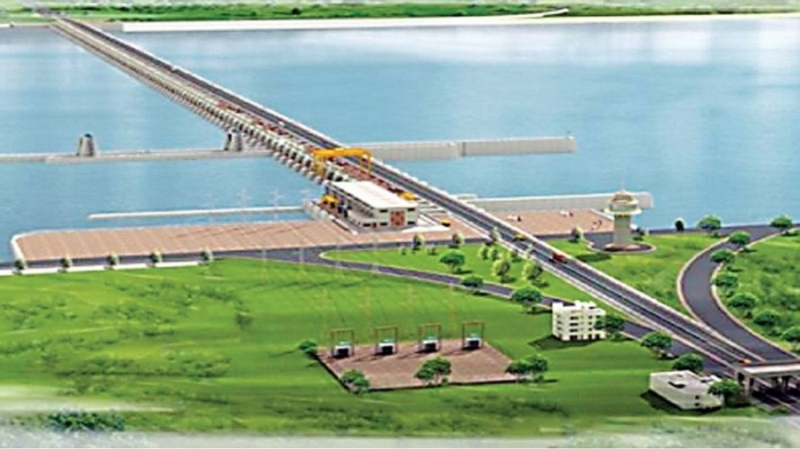
Bangladesh is moving forward with the long-awaited Padma Barrage project after more than six decades of discussions, studies, and feasibility assessments. The proposal was reviewed by the Project Evaluation Committee (PEC) of the Planning Commission on Thursday, chaired by Mustafizur Rahman, member for Agriculture, Water Resources and Rural Institutions Division.
The total estimated cost of the project is Tk50,443.64 crore, but the PEC has recommended implementing it in two phases. The first phase, costing Tk34,608 crore, will cover the main barrage structure and re-excavation of the Hisna-Mathabhanga and Gorai-Madhumati river systems. The project is expected to be completed between March 2026 and June 2033. A senior BWDB official said the proposal will be submitted to the Executive Committee of the National Economic Council (Ecnec) on January 25 for final approval. “The government has decided to start the project with its own funding, though foreign loans may be sought later,” the official added.
Based on extensive studies, Pangsha in Rajbari has been identified as the optimal site. Its location will allow effective river flow control, water diversion, and fair downstream distribution through the 2.1-kilometre-long barrage. The project is largely being driven by reduced water flow in the Padma caused by India’s Farakka Barrage upstream.
The 2.1 km structure will feature 78 spillway gates, 18 undersluice gates, a 14-metre-wide navigation lock, two 20-metre-wide fish passes, and a railway bridge. It is expected to generate around 113 megawatts of hydropower and supply water to key facilities, including the Rooppur Nuclear Power Plant. The first phase will focus on the barrage and river re-excavation, while the second phase will include supportive infrastructure and restoration of remaining river systems. Construction and related works are estimated at Tk18,602 crore, and electrical and hydropower facilities will cost an additional Tk1,161.82 crore.
Water flow in southwest Bangladesh has sharply declined since India’s Farakka Barrage began operations. The 1996 Ganges Water Sharing Treaty regulates flows from January to May each year, and the treaty expires this year. Reduced flow has affected agriculture, fisheries, navigation, freshwater supply, and the Sundarbans ecosystem. Silt accumulation in rivers such as Hisna-Mathabhanga, Gorai-Madhumati, and Chandana-Barashia has blocked natural currents, leaving inland rivers nearly dry during dry months and increasing salinity.
The Padma Barrage will store 2,900 million cubic metres of water during the dry season, restoring river flows and ensuring year-round freshwater supply across southwest and northwest regions. It will improve irrigation for around 1.9 million hectares in 26 districts, benefit nearly one-third of the population, reduce salinity, protect the Sundarbans, remove silt, and improve drainage in poldered areas. The project’s economic internal rate of return is estimated at 17%, with annual financial benefits projected at Tk73,600 crore.
Mashfiqus Salehin, professor at BUET’s Institute of Water and Flood Management, said the project will restore degraded rivers, improve waterlogging and navigability, and control salinity. However, he cautioned that large-scale construction may cause upstream erosion and downstream sedimentation, similar to the effects of Farakka Barrage. Careful planning, advanced design, and technology are crucial to mitigate these risks.
The Padma Barrage is expected to be a transformative infrastructure project, ensuring water security, ecological protection, and agricultural growth for Bangladesh’s southwest and northwest regions.