

- Customs blocks import of nearly 2000 drones by Chawk Bazar trader |
- Bangladesh Faces Volatile Monsoon With Resilient Response |
- Tarique Put Bangladesh’s Interests First at UN: Mahdi |
- Crackdown on extortionists, criminals to be intensified : Home Minister |
Indian Students Resume Protests After Crackdown
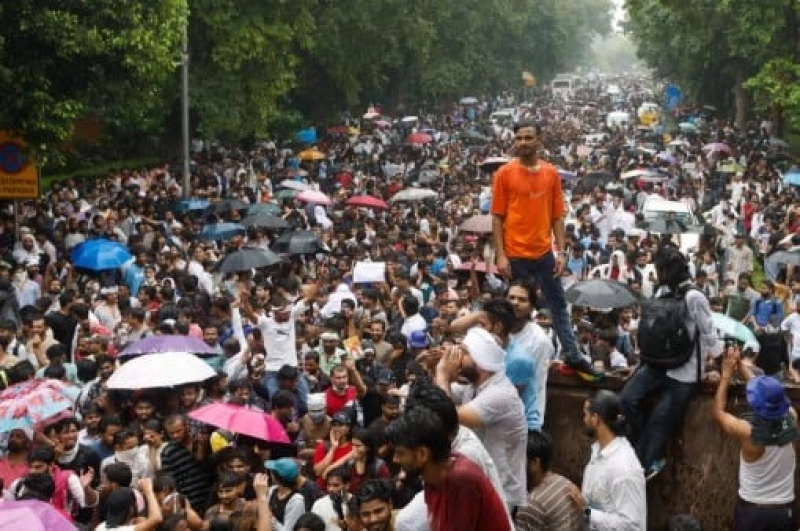
CJP supporters march towards parliament on July 20,
Thousands of students returned to the streets of New Delhi on Tuesday, a day after a violent police crackdown left more than 100 people injured, vowing to continue demonstrations until Education Minister Dharmendra Pradhan resigns over a series of controversial entrance examination scandals.
The renewed protests came despite tear gas, baton charges and multiple criminal cases filed against demonstrators following Monday's march towards Parliament. Protesters are demanding accountability over alleged examination paper leaks, grading irregularities and the reported suicides of more than 20 students linked to the controversies.
By Tuesday morning, demonstrators had regrouped at Jantar Mantar, one of the capital's main protest sites, declaring they would not back down despite the police action.
"We will continue to resist and demand accountability from the government. We will not retreat until Dharmendra Pradhan resigns," said Abhijeet Dipke, leader of the Cockroach Janta Party (CJP), the group leading the protests.
The demonstrations have become one of India's largest youth-led movements in recent years, reflecting growing frustration among millions of students over the credibility of the country's highly competitive entrance examination system.
Protesters accused the government of failing to ensure fair examinations following reports of question paper leaks, alleged evaluation errors and administrative lapses affecting millions of candidates.
Monday's protest turned violent after demonstrators attempted to march towards Parliament. Police used tear gas and baton charges to disperse the crowd, leaving more than 100 people injured and damaging property in central New Delhi.
Authorities later filed at least five criminal cases against protesters, alleging violence, stone-throwing and vandalism. Protesters, however, accused police of using excessive force against peaceful demonstrators.
"This government is treating us like terrorists and criminals," said 18-year-old protester Anshul Dev, who said several of his friends were injured during the clashes.
The movement has also gained momentum following the removal of activist Sonam Wangchuk from the protest site last week. Wangchuk, who had been on a hunger strike demanding the education minister's resignation, remains under medical supervision in a government hospital.
Ahead of Monday's march, protest representatives met Health Minister J.P. Nadda, demanding the education minister's resignation, Wangchuk's release from hospital and compensation for the families of students who reportedly died following the examination controversies.
Protest leaders later described the talks as unsuccessful, saying the government made no concrete commitments.
Prime Minister Narendra Modi has not publicly commented on the protests. Opposition leader Rahul Gandhi joined lawmakers outside the prime minister's residence on Tuesday, calling for broader public support for the students.
Political analysts say the demonstrations are becoming an increasingly significant challenge for the government, as public anger over the examination scandals continues to grow.