

- Support to coastal security, early completion of MRT lines, Airport Terminal III, business promotion assured |
- Tarique Seeks Japanese Support for Energy, Tech and Infrastructure |
- Japan eyes 1 trillion yen investment in Bangladesh over 5 years |
- Dhaka Among World’s 11 Most Polluted Cities on Tuesday |
- Tide Rising, Time Running Out For Coastal People, Wildlife |
US lawmakers say Epstein file release incomplete
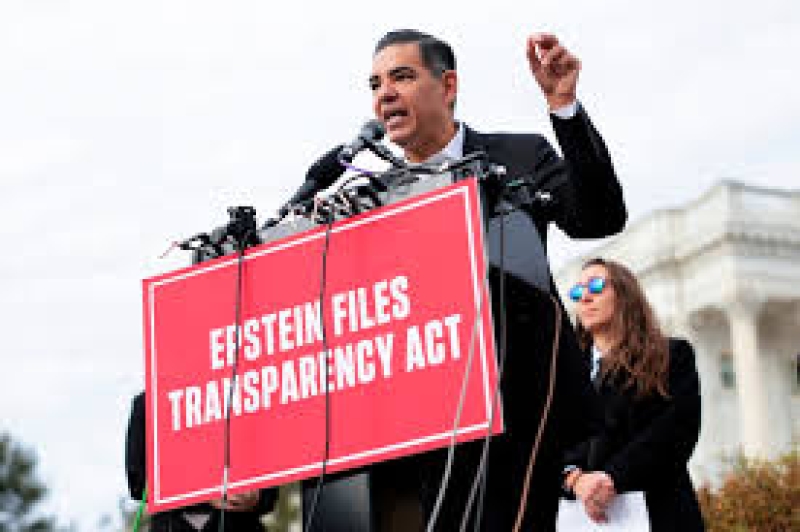
U.S. lawmakers from both parties criticised the Justice Department on Saturday after Attorney General Pam Bondi said all records required under the Epstein Files Transparency Act had been released.
In a letter to Congress, Bondi and Deputy Attorney General Todd Blanche said the department had disclosed all documents in its possession related to disgraced financier and convicted sex offender Jeffrey Epstein, including a list of names appearing in the files.
But Republican Representative Thomas Massie, a co-author of the law, said the disclosure fell short of the statute’s intent. He urged the department to release internal memos, notes and emails detailing past decisions on whether to investigate or prosecute Epstein and his associates.
Earlier this month, the department published millions of documents linked to Epstein. In their letter, Bondi and Blanche said no materials were withheld due to embarrassment, reputational harm or political sensitivity, and that the release complied fully with legal requirements.
They added that individuals named in the files appear in varied contexts — ranging from documented communications with Epstein or his associate Ghislaine Maxwell to incidental mentions in correspondence or media reports — and stressed that inclusion does not imply wrongdoing.
The list includes prominent figures such as former President Donald Trump, former President Bill Clinton, Microsoft co-founder Bill Gates and Britain’s Prince Andrew. All have previously acknowledged past contact with Epstein and denied involvement in his crimes. The names of long-deceased musicians Janis Joplin and Elvis Presley also appear in the records.
Democratic Representative Ro Khanna, who also co-sponsored the legislation, said the department had blurred the line between alleged perpetrators and those mentioned incidentally. He described the inclusion of unrelated or historically implausible names as “absurd” and called for a complete release of records, with only victims’ identities redacted.
In media interviews, Massie said the department was improperly invoking deliberative process privilege to withhold key internal documents, contrary to congressional intent.
The Justice Department has not publicly responded to the latest criticism. Lawmakers and lawyers for victims have previously accused the department of excessive redactions and errors in earlier disclosures, some of which were later revised.
The handling of the Epstein files continues to draw bipartisan scrutiny, intensifying pressure on the department over transparency and accountability.