

- Greenhouse Gas Levels Reach Record High in 2025: WMO |
- Dengue deaths hit 400 as 11 more die in 24 hours |
- Bangladesh’s Dengue Death Toll Hits 400 After 11 More Deaths |
- Support to coastal security, early completion of MRT lines, Airport Terminal III, business promotion assured |
- Tarique Seeks Japanese Support for Energy, Tech and Infrastructure |
Bangladesh's garment exports to Europe exceed €18 bn
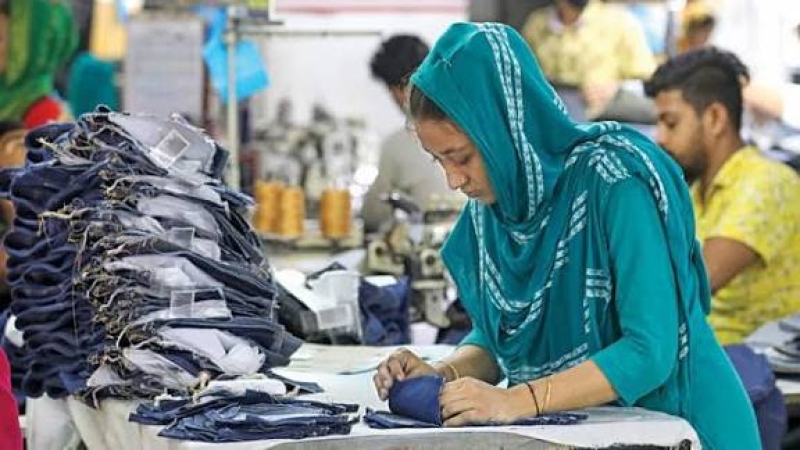
The European Union’s apparel import market witnessed a significant reshuffling in 2025, as Bangladesh’s exports to the bloc climbed to €18.06 billion despite a broader trend of falling unit prices and aggressive competition from China.
According to the latest Eurostat data for the period of January to November 2025, the EU's total apparel imports grew by 3.93 percent, reaching a total value of €82.94 billion. While the market saw a robust 11.60 percent increase in volume, the average unit price for garments fell by 6.88%, signaling a highly competitive, price-sensitive environment for global suppliers.
Bangladesh, the EU's second-largest apparel supplier, saw its export value rise from €16.78 billion in 2024 to €18.06 billion in the first eleven months of 2025—a growth of 7.65 percent. This value growth was largely volume-driven, with an 11.26 percent increase in the quantity of goods shipped, even as the country faced a 3.25 percent decrease in unit prices.
However, data from the end of the period suggests a cooling trend. A comparison between November 2024 and November 2025 reveals a sharp 10.87% drop in export value and a 12.27% decline in unit prices, highlighting the mounting pressure on Bangladeshi manufacturers to lower costs.
The report highlights a strategic pivot by China. Facing ongoing challenges in the United States market, China has intensified its focus on Europe. Chinese apparel exports to the EU reached €24.42 billion, marking a 6.55 percent growth in value. Most notably, China saw a massive 15.73 percent surge in export volume, supported by a 7.93 percent reduction in unit prices.
The sourcing landscape across Asia showed varying results.
Vietnam recorded a healthy 10.10 percent growth, reaching €4.02 billion. Unlike its neighbors, Vietnam saw a 4.19 percent increase in unit price, likely reflecting a shift toward higher-value garments.
Turkey struggled significantly, facing an 11.31 percent decline in exports to the EU, totaling €7.66 billion.
India, Pakistan, and Cambodia all showed substantial growth rates, contributing to the overall volume surge in the European market.
"The data reflects a complex environment where volume is up, but margins are being squeezed," noted Mohiuddin Rubel, Managing Director of Bangladesh Apparel Exchange Ltd, reports UNB.
"While Bangladesh remains a key player, the aggressive pricing strategies from competitors like China and the recent dip in November figures suggest that staying competitive will require a careful balance of volume and value-addition," he said.