

- Dhaka’s air quality moderate on Sunday morning |
- Special prayer held at DU on 45th death anniv of Ziaur Rahman |
- 55-year-old dies in Chuadanga as fibrous mango bit blocks throat |
- Dhaka's air quality ‘moderate’ during Eid holiday |
- Thousands of tourists flock to Kuakata during Eid festival |
US Warns Iran of Strikes on Power, Energy Sector
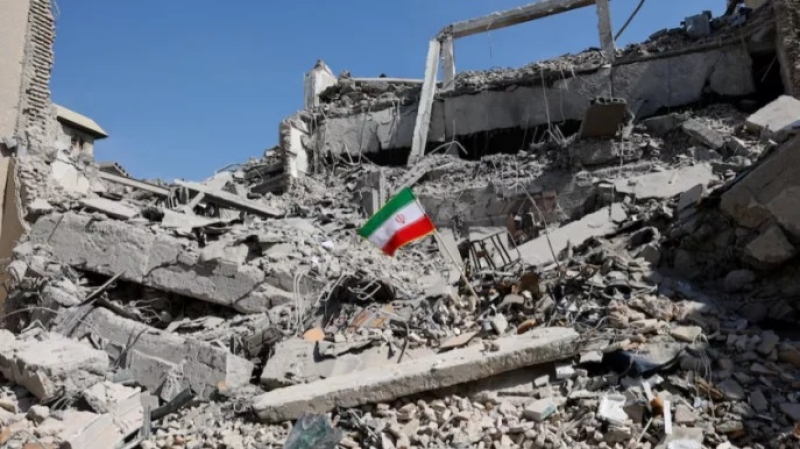
An Iranian flag stands in the rubble following a strike on a police station in Tehran, Iran, March 4.
The United States has warned it is prepared to strike Iran’s power generation and energy infrastructure if ordered, as tensions persist despite a fragile ceasefire.
US Defence Secretary Pete Hegseth said American forces remain on high alert and have strengthened both military capability and intelligence gathering ahead of possible escalation. Speaking at the Pentagon, he cautioned Iran’s leadership to make careful decisions as negotiations with Washington approach.
“We are reloading with more power than ever before, and better intelligence,” he said, adding that US forces are ready to act against critical infrastructure if necessary, though such action is not preferred.
The remarks came as the administration of President Donald Trump expressed cautious optimism about securing a deal to end the conflict, while also signalling tougher economic pressure if Iran refuses to comply.
A naval blockade imposed earlier this week has already forced multiple vessels to turn back, in what US officials describe as part of a broader strategy to push Tehran towards accepting American terms. The demands include reopening the strategically vital Strait of Hormuz, a key route for global oil and gas shipments.
Hegseth described the blockade as a restrained approach, warning it could escalate if diplomatic efforts fail.
Meanwhile, General Dan Caine said US forces are ready to resume large-scale combat operations at very short notice. He added that naval forces would intercept any vessel attempting to support Iran or breach the blockade.
Ships that fail to comply could face forceful action, with enforcement expected both in international waters and within Iran’s territorial seas. So far, no vessels have been boarded, according to US officials.
The US Navy has also expanded restrictions to include a wide range of cargoes considered contraband, including weapons, ammunition, nuclear-related materials, oil products, and key industrial metals. Any vessel suspected of carrying such goods towards Iran could be stopped, searched, and seized under maritime enforcement rules.