

- Dhaka’s air quality moderate on Sunday morning |
- Special prayer held at DU on 45th death anniv of Ziaur Rahman |
- 55-year-old dies in Chuadanga as fibrous mango bit blocks throat |
- Dhaka's air quality ‘moderate’ during Eid holiday |
- Thousands of tourists flock to Kuakata during Eid festival |
UNGA Presidency: Bangladesh intensifies final push as vote nears
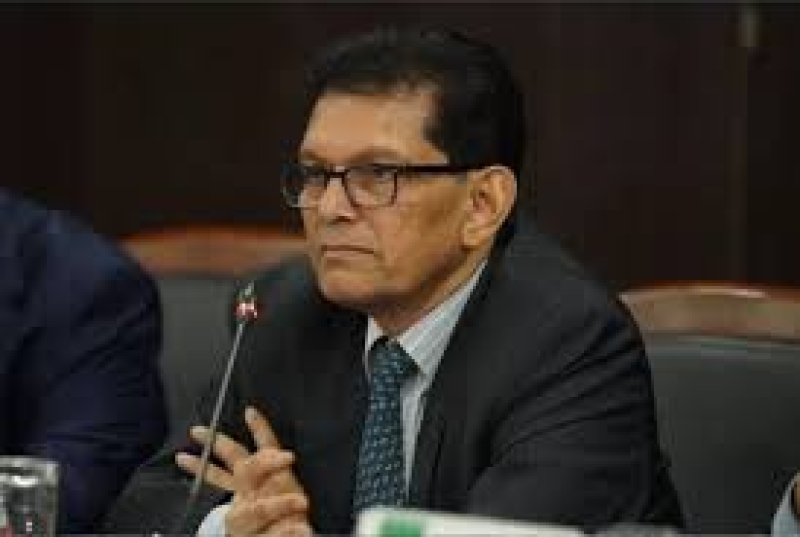
Diplomatic efforts have intensified in the final stretch ahead of the election to the Presidency of the United Nations General Assembly (UNGA), with geopolitical considerations continuing to influence voting calculations among member states, officials say.
Last-minute lobbying by both Bangladesh and Cyprus remains crucial as countries weigh a range of strategic, political and geopolitical considerations, alongside prior commitments, before casting their votes, officials and diplomatic sources told UNB.
“While Bangladesh's candidate, Foreign Minister Dr Khalilur Rahman, is widely viewed as a very strong contender, the outcome will ultimately depend on how competing geopolitical interests align in the closing stages of the campaign, making the final moments before the vote particularly significant,” a diplomat said.
Bangladesh enjoys strong backing from a significant number of member states but faced a challenge due to the limited time available for campaigning.
One of the key challenges is that Cyprus has been campaigning throughout the year, whereas Bangladesh has had hardly three months, or even less, to campaign, a senior official told UNB. “We are trying. Let’s see.”
Despite strong optimism surrounding the bid, he said it is a secret ballot and nothing can be said with certainty at this moment, as countries concerned only know.
Bangladesh last held the prestigious position in 1986-87, when the then Foreign Minister Humayun Rasheed Chowdhury was elected President of the 41st General Assembly. Four decades later, the country is seeking to reclaim the post.
The 81st session of the UNGA will open on September 8, 2026, with the high-level General Debate commencing on September 22.
The election of the President of the United Nations General Assembly for the eighty-first session will be held on June 2 at 10am in the General Assembly Hall at UN Headquarters, in line with Rule 30 of the Rules of Procedure.
In accordance with the established regional rotation, the President of the eighty-first session of the General Assembly will be elected from the Asia-Pacific Group.
Foreign Minister Dr Khalilur left Dhaka for New York ahead of Eid-ul-Adha as part of his last-minute campaign, a senior official told UNB.
Attention is now focused on the June 2 election, where Bangladesh and Cyprus are competing for the influential post.
Ambassador Andreas S. Kakouris, Cyprus' candidate for the UNGA Presidency, brings over four decades of diplomatic and administrative experience in multilateral and bilateral diplomacy, as well as at headquarters.
The position changes every year and rotates among the five regional groups of the UN (Africa, Asia-Pacific, Eastern Europe, Latin America and the Caribbean, and Western Europe and Others).
The President is elected directly by the member states in the UNGA, with each country having one vote.
Questions continue to surround what Foreign Minister Dr Khalilur’s role would look like if he is elected President of the 81st Session of the United Nations General Assembly (UNGA).
Those who follow foreign affairs have been informally discussing whether Dr Khalilur would step down from his current responsibilities as Bangladesh's Foreign Minister to serve full-time at the UN, or attempt to carry out both roles simultaneously.
Foreign Minister Dr Khalilur, however, made it clear during the informal interactive dialogue at the UN on May 13 that resignation is not the only option.
Civil society organizations and individuals were invited to engage in the informal interactive dialogue by submitting questions to the candidates.
“Will I resign? No, my Prime Minister (Tarique Rahman) has told me very clearly that he's going to let me off for one year to do a full-time job. Resignation is not the only option. I can get a leave,” said Dr Khalilur while responding to a question during the informal dialogue.
There have been instances in the past where foreign ministers simultaneously served as President of the United Nations General Assembly while retaining their ministerial portfolios.
For example, Abdulla Shahid of the Maldives concurrently served as the country's Minister of Foreign Affairs while serving as President of the 76th session of the UNGA in 2021.
However, it remains unclear whether Foreign Minister Dr Khalilur would follow a similar arrangement if elected President of the 81st Session of the UNGA.
Humayun Rasheed Choudhury of Bangladesh, who was elected President of the 41st session of the General Assembly, had been serving as his country's Foreign Minister since July 3, 1985.
Choudhury headed Bangladesh's delegation to the 39th session of the General Assembly and, as one of the session's vice presidents, presided over a number of plenary meetings.
From July 1984 until his appointment as Foreign Minister, Choudhury, a career diplomat, served as Adviser for Foreign Affairs to the President of Bangladesh. In May 1986, he was elected a member of the Bangladesh Parliament.
If elected, Foreign Minister Dr Khalilur would become one of the most prominent international voices representing the 193-member UN body, giving Bangladesh an unprecedented opportunity to shape discussions on peace, sustainable development, climate action, and global governance.
The outcome remains uncertain, keeping diplomats and international observers closely watching the race.
Amid the speculation, Dr Khalilur recently pledged that, if elected, he would serve as a "full-time President" and work as "a President for everyone," underscoring his commitment to the role and the broader UN membership.
The Foreign Minister vowed to serve as a "full-time President" and a President for everyone if elected President of the 81st Session of the United Nations General Assembly (UNGA).
"If elected, I will be everyone's President, a full-time President," he said while participating in the informal interactive dialogue as part of the election process for the presidency of the 81st session of the UNGA, reports UNB.
Dr Khalilur said he would unfailingly uphold the UN Charter and engage all member states, paying particular attention to small delegations. "I am able, willing, and ready to serve as your President from day one," he said.