

- UN, partners appeal for USD 710.5 mn for Rohingya response in BD |
- Govt to Build Ganga, Teesta Barrages for Water Security |
- Bangladesh Warned Repeatedly Over Measles Vaccine Gap |
- 163 Olive Ridley turtle hatchlings found on Kuakata beach |
Trump Rejects Iran Talks, Warns War Until Leaders Fall
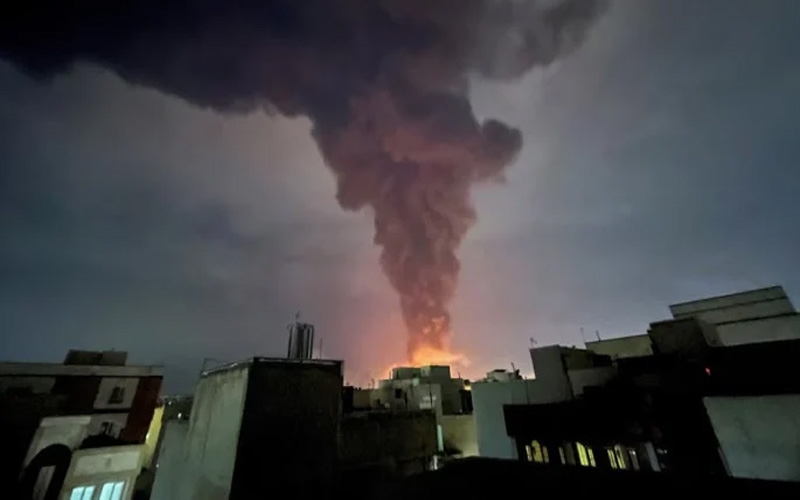
Smoke rises following an explosion, amid the US-Israeli conflict with Iran, in Tehran, Iran, March 7, 2026. Picture taken with a mobile phone.
US President Donald Trump said he is not interested in negotiating with Iran and suggested the conflict could continue until the country no longer has a functioning military or leadership.
Speaking to reporters aboard Air Force One on Saturday, Trump said the ongoing air campaign might make negotiations irrelevant if Iran’s leadership and military capability are eliminated. He added that the conflict could end only when there is no leadership left to continue the war.
“At some point, I don't think there will be anybody left maybe to say ‘We surrender,’” he said.
Meanwhile, Masoud Pezeshkian, the president of Iran, apologised to neighbouring countries affected by Iranian attacks on US facilities in the region and urged them not to join US–Israeli strikes against Iran.
Pezeshkian dismissed Trump’s demand for the Islamic Republic’s unconditional surrender as unrealistic. However, he said Iran’s temporary leadership council had agreed to suspend attacks on nearby states unless strikes on Iran originated from their territory.
His remarks triggered criticism from hardliners inside Iran. Ali Larijani, secretary of Iran’s Supreme National Security Council, later said there was no disagreement among Iranian officials over how the war was being handled.
Fighting intensified as the conflict between Israel and Iran entered its second week. Explosions were reported in parts of Tehran, while Israel said it had struck Iranian missile sites and command centres.
Iranian authorities said the attacks had killed more than a thousand civilians and injured thousands more. Iranian strikes have also caused casualties in Israel, while several US service members have been killed in the conflict.
Tensions have spread across the region, with drone attacks reported in Saudi Arabia, Kuwait and the United Arab Emirates. Iran’s Revolutionary Guards also targeted US forces at a base in Bahrain, according to Iranian state media.
As the conflict widened, Israel warned Lebanon that it would face a “very heavy price” if it failed to restrain the Iran-aligned militant group Hezbollah. Israeli airstrikes hit several Hezbollah-controlled areas in Beirut, causing widespread destruction.
The escalating war has shaken global markets, pushing energy prices higher and disrupting shipping routes. Oil production cuts in several Gulf countries have added to supply concerns, while the strategic Strait of Hormuz has effectively been closed to shipping, intensifying fears of a wider economic impact.