

- UN, partners appeal for USD 710.5 mn for Rohingya response in BD |
- Govt to Build Ganga, Teesta Barrages for Water Security |
- Bangladesh Warned Repeatedly Over Measles Vaccine Gap |
- 163 Olive Ridley turtle hatchlings found on Kuakata beach |
Iran Says It Can Fight Months as Israel Hits Beirut
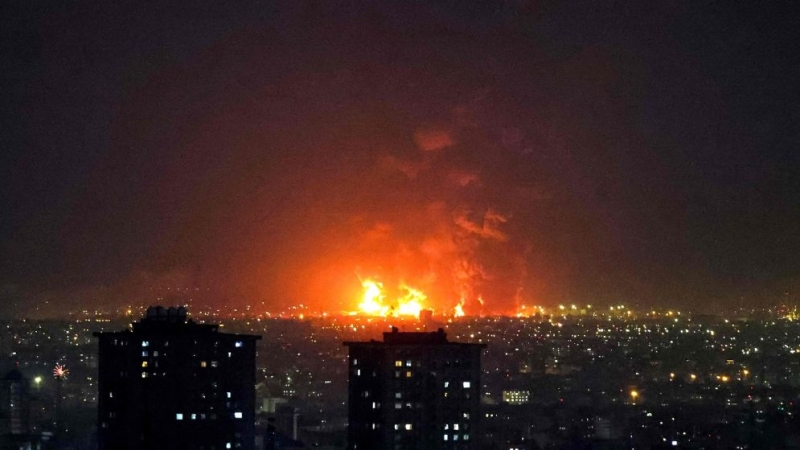
Explosions erupt following strikes at Tehran Oil Refinery in Tehran on March 7, 2026. The United States and Israel launched strikes against Iran on February 28, sparking swift retaliation by the Islamic republic which responded with missile attacks across the region.
Islamic Revolutionary Guard Corps said on Sunday that Iran could sustain an intense war for up to six months against Israel and the United States, as the conflict widened across the Middle East.
The statement came as Israel said it carried out a precision strike targeting commanders of the Quds Force, the overseas arm of Iran’s Revolutionary Guards, at a seaside hotel in central Beirut. Lebanese authorities reported that at least four people were killed in the strike, which damaged parts of the building.
Fighting has intensified in the second week of the war, triggering regional repercussions. Saudi Arabia said it intercepted several drones heading towards targets including the diplomatic district in Riyadh. Kuwait reported that an attack struck fuel storage tanks at its international airport, raising concerns over energy security.
The incident added to fears about global energy supplies as Kuwait’s national oil company announced a reduction in crude output due to threats around the strategic Strait of Hormuz, through which about one-fifth of the world’s oil and gas shipments pass.
Tehran also accused the United States and Israel of striking an oil depot in the Iranian capital, Tehran, marking the first reported attack on the country’s oil infrastructure during the conflict. Israel’s military said it targeted fuel storage sites used to support military operations.
Israeli Prime Minister Benjamin Netanyahu vowed to continue the war “with all our force,” following earlier joint US–Israeli strikes that killed Iran’s Supreme Leader Ali Khamenei and triggered the regional escalation.
Iranian officials warned that the country still has more advanced and longer-range missiles that could be deployed in the coming days. Revolutionary Guards spokesman Ali Mohammad Naini said Iran had so far used only earlier-generation missiles in the fighting.
The conflict has spread across several countries, with new missile and drone attacks reported in Qatar, the United Arab Emirates and other Gulf states hosting US military facilities. Explosions were also reported in parts of Iraq.
Inside Iran, residents reported growing anxiety as strikes damaged infrastructure and residential areas. Iranian authorities say hundreds of civilians have been killed and thousands wounded since the conflict began.
Meanwhile, Israel has launched additional airstrikes in Lebanon after the Iran-allied group Hezbollah fired rockets and drones toward Israeli territory. Lebanese officials say hundreds of people have died in Israeli air raids over the past week.
Analysts warn there is still no clear path to ending the conflict, which has shaken global markets and pushed oil prices higher amid fears of a prolonged regional war.