

Wednesday, September 2, 2026
News update
- Govt to procure 4 LNG cargoes to meet energy demand |
- PM Unveils 10-Year Energy Roadmap to Support $1T Economy |
- As Spain swelters, a centuries-old accessory is having a moment |
- UN Warns Climate Action Must Accelerate to Avert Catastrophe |
- Dhaka ranks 11th globally for poor air quality |
PM Unveils 10-Year Energy Roadmap to Support $1T Economy
GreenWatch Desk:
Energy
2026-09-02, 5:20pm
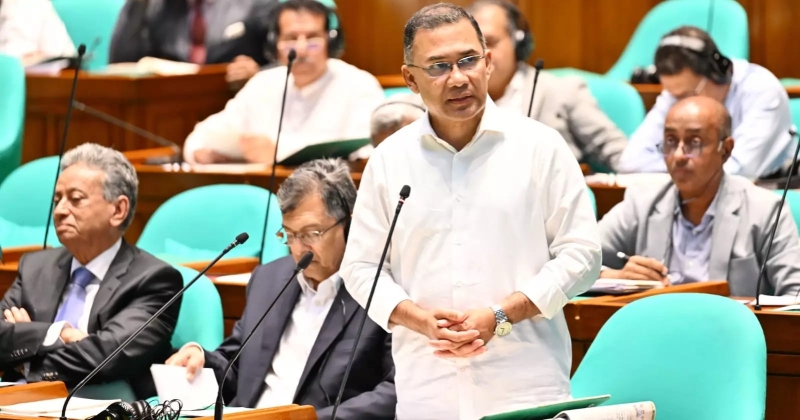
The government has drawn up a 10-year master plan for the energy and power sector to support its goal of turning Bangladesh into a $1 trillion economy by 2034, Prime Minister Tarique Rahman told parliament on Wednesday.
Responding to a supplementary question from Cumilla-10 lawmaker Md Mobasher Alam Bhuiyan, the prime minister said the plan is currently under review and will be presented to parliament by the energy minister once it is finalised.
Speaker Hafiz Uddin Ahmad presided over the session.
Tarique said a long-term roadmap for the energy and power sector would be crucial to achieving the government’s trillion-dollar economy target.
“Once the review is completed, the energy minister will present the plan in parliament,” he said.
Responding to another question on how the government plans to achieve a $1 trillion economy by 2034, the prime minister said the target was set out in the FY2026-27 national budget speech.
He said the target goes beyond GDP growth and encompasses macroeconomic stability, investment, production, employment, exports, human resource development, fiscal discipline and balanced regional development.
Three-stage economic strategy
The government has adopted a three-stage “3R” strategy — Recovery and Stabilisation, Restoration, and Reconstruction for Acceleration — to revive and transform the economy, the prime minister said.
The first stage, Recovery and Stabilisation, will run for one year and focus on reversing economic decline and restoring macroeconomic stability.
The second stage, Restoration, will cover the first three years of the government’s tenure and focus on rebuilding capacity in revenue mobilisation, private investment, banking and finance, exports, employment, human resources, agriculture, energy and infrastructure.
The third stage, Reconstruction for Acceleration, will span the following five years and focus on structural economic transformation, innovation-led growth, stronger institutions and greater global connectivity.
The government aims to raise foreign direct investment to 2.7% of GDP and total investment to 40% of GDP by FY2030-31, Tarique said.
It is also pursuing deregulation and ease-of-doing-business measures to make private investment the main driver of economic growth.
A centralised digital platform, BanglaBiz, has been introduced to streamline business approvals, while an FDI heat map covering 19 promising sectors has been published to attract foreign investment, he said.
The government is also working to strengthen the capital market, corporate bond market and other sources of long-term financing.
On revenue mobilisation, the government aims to increase the revenue-to-GDP ratio from 8% to 11% and the tax-to-GDP ratio from 6.8% to 9.6% by FY2030-31.
For public investment, the government will focus on maintaining manageable budget deficits, debt discipline and value for money while considering employment and environmental concerns, the prime minister said.
Energy, exports and regional development
Energy security, skilled human resources, expansion of the digital economy, export diversification, agro-based industrialisation and balanced regional development are also part of the government’s long-term economic strategy.
The government plans to develop agro-processing industries, cold-chain facilities, storage, food processing and logistics infrastructure in northern Bangladesh, Tarique said.
Under the strategy, the government will first seek to restore macroeconomic stability and increase investment and production while expanding employment and exports and reforming the revenue and financial sectors.
In the longer term, it aims to build an inclusive economy driven by innovation and productivity to achieve the $1 trillion target by 2034.