

- Dhaka ranks 6th in global air quality index |
- UN, Partners Continue Delivering Aid to Gaza Amid Restrictions |
- El Niño is surging. Months of extreme heat could follow |
- Himalayan Floods Not Just a Water Event, But a Debris Event |
- ICT chief prosecutor warns of attempts to sabotage tribunal |
Renewable Energy Can Help Overcome Power Shortage: BERC
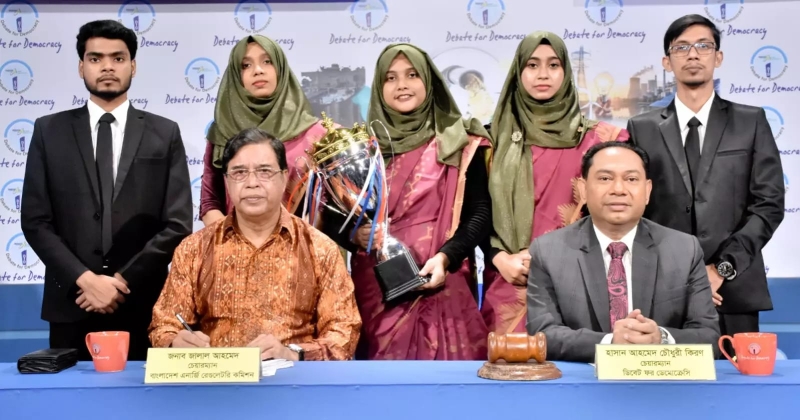
Bangladesh can overcome its electricity shortage and gradually ease the ongoing energy crisis by expanding renewable energy generation, provided the government maintains policy support and facilitates low-interest financing, Bangladesh Energy Regulatory Commission (BERC) Chairman Jalal Ahmed said Friday.
He also called for a proper investigation into allegations of corruption in the quick rental power sector, noting that electricity prices remained high even after investors had recovered their investments.
Jalal made the remarks while addressing a shadow parliament on "Investment in Renewable Energy to Ensure Energy Security" at the Bangladesh Film Development Corporation (BFDC).
He called for coordinated initiatives to encourage industries and other investors to generate renewable energy, saying Bangladesh should pursue a balanced energy mix to ensure long-term energy security.
"Energy security requires greater emphasis on a balanced and integrated fuel management system," he said.
Regarding quick rental power plants, the BERC chairman said they were initially intended to operate for three years, with electricity priced at around Tk 16 per unit.
"However, even after investors recovered their investment, electricity was purchased at nearly the previous rate when contracts were renewed instead of fixing prices based only on operational costs," he said.
Jalal said allegations of corruption in the quick rental power sector could not be ruled out and called for a proper investigation.
The programme was organised by Debate for Democracy and chaired by its Chairman Hassan Ahamed Chowdhury Kiron.
Kiron said the previous government had increased dependence on imported energy while neglecting domestic supplies, with LNG imports prioritised over productive investment.
He alleged that successive irregularities and corruption in the previous regime's energy sector had contributed to the current gas and electricity shortages, disrupting industrial production.
Kiron also alleged that Bangladesh Petroleum Exploration and Production Company Limited (BAPEX) had been kept ineffective to increase dependence on imported energy. He said capacity payments had become a major source of corruption, with large amounts paid even when electricity was not generated.
He called on the government to take short-, medium- and long-term measures to expand both fossil fuel and renewable energy capacity.
In the shadow parliament debate, Government Bangla College emerged victorious after defeating the National Institute of Textile Engineering and Research.
Journalists Sadul Hasan, Rishan Nasrullah, Sazzad Hossain, Rafiqul Basar and Atiqur Rahman served as judges.