

- State Minister Amit urges global firms to join BD offshore bidding |
- Heart Disease Linked to 777 Daily Deaths in Bangladesh |
- US Tech Firms Eye Over $1b Investment in Bangladesh |
- Dhaka ranks 6th globally in air pollution on Tuesday |
- Netanyahu Secretly Visits UAE Amid Rising Regional Tensions |
Dhaka Airport Fire Puts Safety Standards in Question
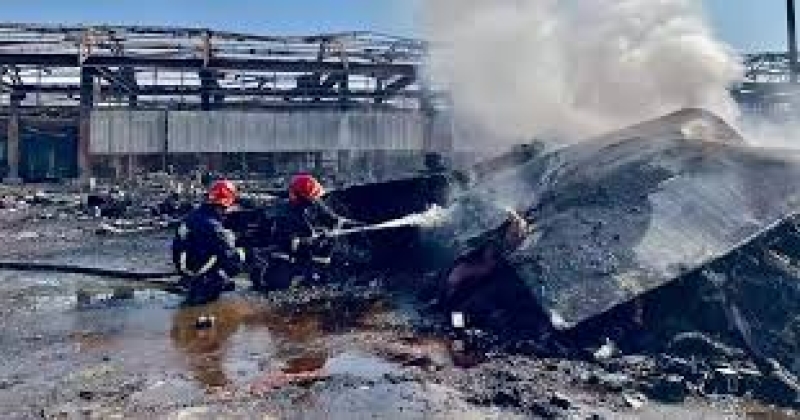
Just a week after Bangladesh earned top marks in a UK aviation security audit, the Civil Aviation Authority of Bangladesh (CAAB) is under fire for apparent fire safety failures following a catastrophic blaze at the cargo village of Hazrat Shahjalal International Airport (HSIA).
The fire, which raged for over 26 hours, originated in a courier shed and caused an estimated loss of Tk12,000 crore. Investigations now reveal alarming gaps in basic fire protection systems, raising serious questions about airport preparedness and oversight.
Biman Launches Probe
Biman Bangladesh Airlines, the airport’s sole cargo handler, has formed a seven-member investigation team led by its flight safety chief. The probe will evaluate HSIA’s fire safety framework based on 15 key questions—including whether sprinkler systems were operational, if hydrants were installed in the cargo zone, and whether firefighting vehicles were adequately equipped.
Conflicting Claims on Safety Standards
While CAAB asserts that HSIA complies with International Civil Aviation Organization (ICAO) safety standards, the Fire Service and Civil Defence Department paints a different picture.
“Fire safety in the cargo area was effectively non-existent,” a senior fire official told The Business Standard. “There were no functioning detection systems, sprinklers, or designated fire exits. The warehouse layout resembled a local storage facility, which made firefighting extremely difficult.”
HSIA Executive Director Group Captain SM Ragib Samad disputed this, stating that the warehouse had 132 operational fire extinguishers, but the absence of personnel at the fire’s origin prevented immediate response. CAAB Chairman Air Vice Marshal Md Mostafa Mahmood Siddiq added that firefighting vehicles arrived within 30 seconds of detection, though he admitted the warehouse lacked front and rear sprinklers.
“Most older airports were not designed with modern fire systems, but we met minimum ICAO standards,” he said.
Unclear Responsibility
The shed where the fire began was managed by a mix of stakeholders—including Biman, Customs, and private courier companies—though no agency has accepted full responsibility.
“CAAB owns the infrastructure but delegates daily management to Biman, Customs, or courier firms,” said the CAAB Chairman. “The office was closed for the weekend, and no staff were inside when the fire broke out.”
Biman spokesperson Boshra Islam stated that the facility had not been under Biman’s supervision since 2013. Customs also denied responsibility, saying their operations had ended for the day well before the fire began.
Lack of Hydrants and Equipment
Concerns have also surfaced over the absence of fire hydrant points in key cargo areas. HSIA officials admitted the cargo zone lacked dedicated hydrants, though the terminal's internal system was operational.
“Our firefighting vehicles were refilled using terminal hydrants, but ideally, each cargo building should have its own,” said HSIA’s executive director. Currently, only three firefighting vehicles are available at the airport, all designated for Boeing 777 emergencies.
New firefighting units are expected under the Terminal 3 expansion project, but have not yet been deployed due to pending approvals.
Audit Gaps and Accountability
The investigation will also review the timeline and findings of the last fire safety audit, including whether hydrants and foam systems are routinely tested and maintained. The executive director claimed audits occur “regularly,” and staff receive daily fire training—but could not provide specific dates.
The probe will assess whether flammable material limits are enforced, when fire certifications were last issued, and whether the Airport Emergency Plan and Fire Prevention Policy meet international benchmarks.
Investigators are also examining why trained Fire Service personnel are not permanently deployed in such high-risk zones. Fire Service officials responded that airport licensing and safety are CAAB’s responsibility.
What’s Next?
The Biman-led committee has five working days to submit its report. Meanwhile, business leaders warn of an “image crisis” for Bangladesh’s aviation sector, with exporters facing massive losses and calling for urgent reforms in airport infrastructure and oversigh