

- 3,156-pound pumpkin grown in Rhode Island is possible world record |
- Explosions rock Riyadh as Iranian strikes on vessels in Hormuz intensify |
- Nobel Peace laureate defends international justice amid US criticism |
- Litton sets Bangladesh wicketkeeping record in Afghanistan Test |
- Oil Prices Fall Despite Fears of Saudi Supply Disruptions |
Bangladesh Road Deaths Hit 67 Per 1000 KM: WHO Report
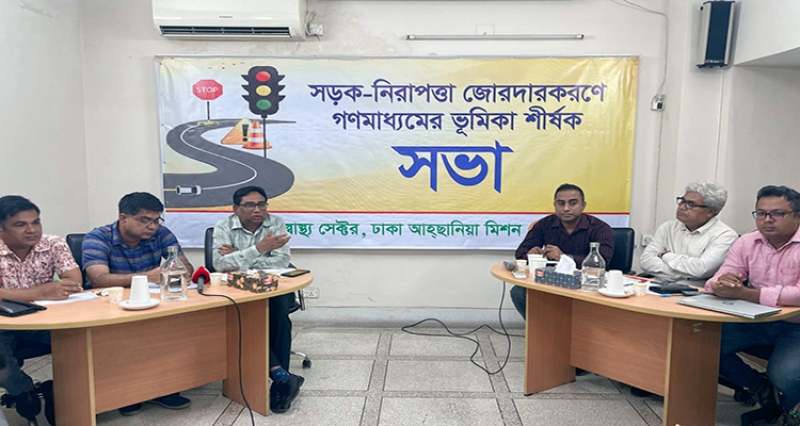
Dhaka Ahsania Mission organises a discussion titled “The Role of Media in Ensuring Road Safety” on Wednesday at the organization’s Health Sector conference room in Shyamoli, Dhaka.
Bangladesh is facing a severe road safety crisis, with one of the highest road fatality rates in the region. According to the Asian Transport Observatory’s Bangladesh Road Safety Profile 2025, the country records around 67 road deaths per 1,000 kilometers of road network.
The broader situation appears even more alarming when global health estimates are considered. The World Health Organization (WHO) suggests that around 31,578 people die in road crashes every year in Bangladesh, highlighting a significant gap between official records and independent estimates.
The data was presented by Sharmeen Rahman, Road Safety Project Coordinator of the Dhaka Ahsania Mission, during a keynote presentation at a discussion titled “The Role of Media in Ensuring Road Safety.” The event focused on developing and implementing a speed limit guideline manual aimed at reducing speed-related crashes. It was held on Wednesday morning at the organization’s Health Sector conference room in Shyamoli, Dhaka.
Speakers at the event emphasized that speeding remains one of the most critical risk factors on roads. Globally, nearly 54 percent of road crash deaths are linked to excessive speed. In Bangladesh, police data from 1998 to 2016 shows that about 82 percent of crashes were associated with speeding and reckless driving.
The discussion also highlighted that more than half of road crash victims are pedestrians, cyclists, and motorcyclists, making them the most vulnerable group on the roads, especially in high-speed traffic environments.
Citing the WHO Global Status Report on Road Safety 2021, speakers noted that around 1.19 million people die annually in road crashes worldwide. About 92 percent of these deaths occur in low- and middle-income countries. The report also shows that road crashes are the leading cause of death for people aged 5 to 29 globally, while nearly two-thirds of fatalities involve working-age individuals.
Experts at the meeting stressed the urgent need for stronger interventions. Key recommendations included introducing a standardized speed management guideline, strengthening enforcement by law enforcement agencies, installing mandatory speed governors in vehicles, and accelerating the formulation of a comprehensive national road safety law to ensure safer roads for all users.