

- Security, sacrifice or opportunity: Climate action visions differ |
- Four New Subjects to Join Curriculum From 2027 |
- Strong children mean a stronger Bangladesh: PM |
- UK All-Party Parliamentary Group on BD Meets Humaiun Kobir |
- World Bank Keeps Bangladesh FY27 Growth Forecast at 3.4% |
Bangladesh Has 50 Gazetted Ethnic Groups: Minister
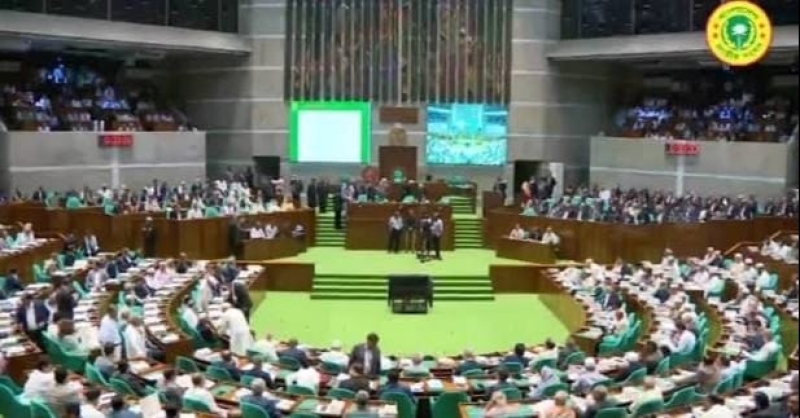
Cultural Affairs Minister Nitai Roy Chowdhury on Thursday said Bangladesh has 50 gazetted ethnic communities and their total population stands at 1.65 million, accounting for around one per cent of the country's population.
The minister made the statement in Parliament while replying to a question from BNP reserved-seat lawmaker Selina Sultana.
The figure is based on the preliminary report of the Population and Housing Census 2022, which counted both scheduled and other ethnic communities, he said.
Among the ethnic communities, the Chakma constitute the largest group, accounting for 29.29 per cent of the total ethnic population, or 483,299 people, the Marma community makes up 13.59 per cent, with a population of 224,261, while the Tripura community accounts for 9.49 per cent, or 156,578 people.
The Santal community represents 7.82 per cent of the ethnic population, numbering 129,049.
The minister said Chattogram Division is home to the highest number of ethnic community members with a population of 990,860.
Of the total ethnic population, 22.60 per cent reside in Rangamati district, amounting to 372,864 people, while 21.17 per cent live in Khagrachhari, with a population of 349,378. Bandarban hosts around 12 per cent of the country's ethnic population, or 197,975 people, he added.
Responding to another question from MP Md Anwarul Islam of Kurigram-1, the minister said a project titled "Construction of Cultural Centres at Upazila Level" is currently under consideration by the Bangladesh Shilpakala Academy under the Ministry of Cultural Affairs.
The proposed project includes provisions for allocating one floor of each centre as a public library to promote reading habits, spread knowledge among citizens and help protect young people from drug abuse and cultural degradation through the development of healthy cultural practices.
Replying to a question from Jamalpur-3 MP Mostafizur Rahman Babul, the minister said the government has a specific plan to expand cultural programmes in educational institutions to promote the practice of music and fine arts.
As part of the initiative, the subject of "Arts and Culture" is being incorporated into the new national curriculum in coordination with the Ministry of Education.
He said the Bangladesh Shilpakala Academy is also distributing musical instruments to educational institutions, organising school- and college-based theatre festivals and holding creative talent competitions. District and upazila-level Shilpakala Academies are involving local youth directly in these programmes.
In response to a question from Dhaka-18 MP SM Jahangir Hossain, the minister said the Ministry of Cultural Affairs has been working relentlessly to preserve indigenous culture, heritage, history, the spirit of the Liberation War, contemporary arts and literature, while promoting free thinking, research and intellectual development.
He further said that the Capital Development Authority (RAJUK) has already allocated 41 kathas of land in Sector 17 of Uttara for the construction of a cultural complex, reports UNB.