

- Bus Fares Rise by 17 Paisa Per Kilometre |
- PM arrives in New York to attend 81st UNGA session |
- Jatri Kalyan Samity urges withdrawal of increased fuel prices |
- Global Diesel Shortage Likely to Persist Into 2027 |
Opposition involved in ‘self-self-confessed extremist activities’: Rizvi
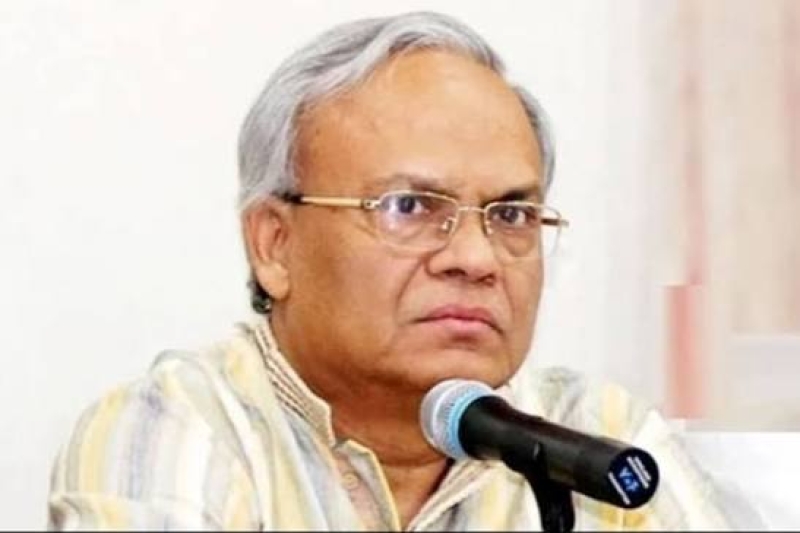
BNP Acting Secretary General Ruhul Kabir Rizvi on Tuesday alleged that the political party now playing the role of the opposition is involved in “self-confesses violent activities” and that threats are coming from within the party.
“We are now seeing fires and crude bomb explosions at different places in Dhaka. Are all of them by associates of fallen autocrat? Now statements about self-admitted extremism are coming from the political party that is now playing the role of the opposition. They are involved in self-admitted violent activities, and the threats are certainly coming from among them,” he said.
You know who I am referring to, but I may not want to say it,” he added.
Rizvi was speaking as the chief guest at a discussion titled “Role of the Government and Opposition in Establishing a Democratic State” organised by Jatiyatabadi Samomona Jote at the Jatiya Press Club’s Zahir Hossain Chowdhury Hall.
He said buses were set on fire in Madhya Badda, Uttara, Mirpur and Kafrul, while fires were reported on trains.
“We have seen crude bomb explosions in front of the High Court and in front of the Dhaka University’s main gate. Who are they?” he asked.
Rizvi questioned the use of fuel by the Jamaat-led 11-party alliance during its recent long march to Rangpur, saying the alliance itself acknowledged taking around 1,000 vehicles while toll records showed 450 vehicles crossed the Jamuna Bridge.
“Today, our gas supply to the national grid is low and our electricity supply is also low. At a time of fuel crisis, even saving some fuel would have been useful. Why did you allow the fuel of 450 vehicles to be burned when they travelled such a long distance from Dhaka to the northern region?” he asked.
Rizvi also said that some of the vehicles did not pay tolls.
“They themselves admitted that they took 1,000 vehicles. Then you understand how many vehicles went. Some vehicles did not pay tolls either. Those were not included in the count,” he said.
He said toll collectors at some of the five toll plazas might have refrained from collecting money out of fear because of the large number of people and vehicles.
Rizvi also referred to an incident at Rajshahi Railway Station late at night two days earlier, alleging that the student wing of opposition what he described as “Covert” carried out unprecedented vandalism and destructive activities there.
“Who will take responsibility for this?” he asked.
Rizvi challenged the political parties organising long marches over rising commodity prices, extortion and corruption to organise a similar march or protest against what he described as planned acts of violence.
“You are organising long marches against rising prices, extortion and corruption. Then organise a long march against this planned terrorism. Hold a protest meeting or procession against it and let us see,” he said.
He accused the political parties following “two policies”, making what he described as false statements while encouraging their “golden” and “silver” youths to carry out destructive activities.
He questioned the group’s political ethics, saying it claims to practise politics in the name of Islam, while Islam gives importance to morality and ethics.
Referring to the Islamic concept of hypocrisy, he said, “As much as I know about Islam, I understand that a hypocrite is considered worse than a disbeliever.”
Rizvi said legitimate government activities could not be obstructed through propaganda.
“Gradually, our financial sector and banking activities are finding their footing again,” he said.
He said the increase in reserves has enabled Bangladesh to buy gas and fuel from abroad and regain purchasing capacity, reports UNB.
“Once the global barriers are removed, our kitchen stoves will burn, our mills and factories will become vibrant and normal activities will resume,” he said.