

- 7 killed as bus collides with auto-rickshaw in Mymensingh |
- Heatwaves Cost Bangladesh Nearly Tk 77,000 Crore a Year |
- Protecting Bangladesh’s coastal people From Tide-induced Loss, Damage |
- Four Warehouses Linked to Salman Muqtadir’s In-Laws Sealed |
- Dengue surge: N’ganj hospitals treat patients on floors, verandas |
Pakistan Targets 5,000 Vehicle Exports to Bangladesh
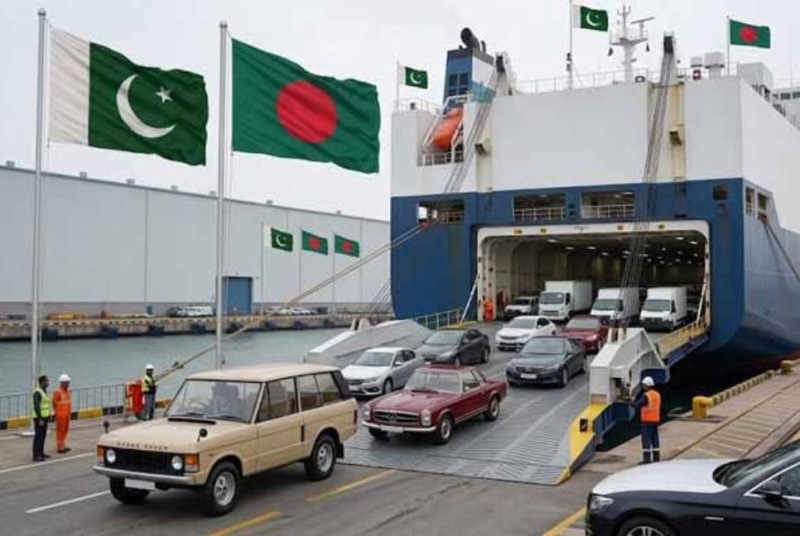
Pakistan has signed an agreement with Bangladesh to export locally manufactured vehicles, aiming to ship 5,000 units by 2029 as part of efforts to expand its automotive exports.
Speaking to reporters, Special Assistant to the Pakistan Prime Minister on Industries and Production Haroon Akhtar Khan described the agreement as a major milestone for the country's automobile industry, saying it would mark the first large-scale export of Pakistan-made vehicles to Bangladesh.
He said the government is working to transform Pakistan into a global manufacturing hub, adding that investment from Chinese companies is playing a significant role in advancing that goal.
Haroon Akhtar said more than 150 memorandums of understanding (MoUs) have been signed for battery production in Pakistan, while about 95% of mobile phones used in the country are now manufactured domestically.
He also said Pakistan plans to begin local production of solar panels to reduce reliance on imports.
As part of efforts to promote electric mobility, the government has issued 86 licences for the manufacture of two-wheeled electric motorcycles, he added.
Rincon Auto Managing Director Romorau Chaudhry said the company would work with Pakistani partners to export vehicles to Bangladesh, noting that the Bangladeshi market also has strong demand for electric motorcycles.
MG Pakistan Chief Executive Officer Jian Qiang Sao said the automobile industry requires supportive government policies and adequate protection to achieve sustainable growth.