

- Bangladesh to Introduce New Law to Curb Extortion, IGP Says |
- UN Marks 81 Years of Global Cooperation and Peace |
- Dhaka's air 5th worst in the world this morning |
- Around 7,500 Bangladeshis imprisoned in Saudi Arabia: Shama Obaed |
- Bangladesh Outperforms India in Global Hunger Index 2026 |
India Restricts Key Jute Imports via Land Borders
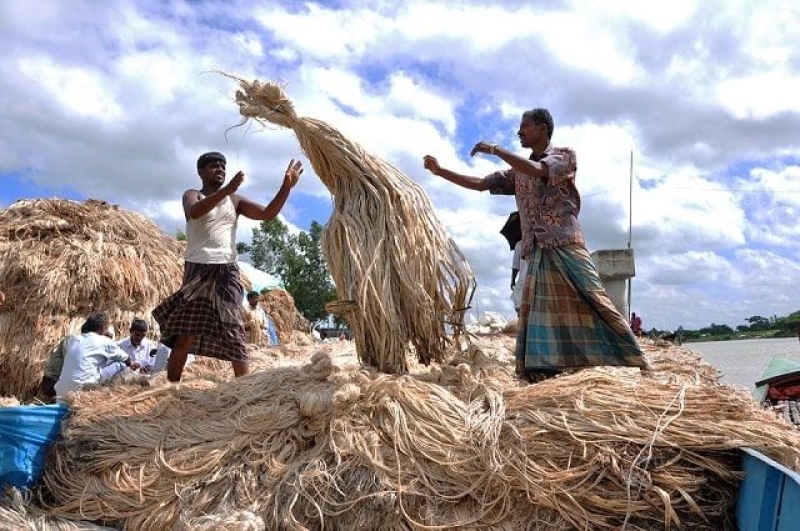
India has imposed fresh restrictions on imports of several jute products from Bangladesh, significantly affecting trade flows between the two countries. The new directive prohibits the import of four types of jute items through land ports, mandating that these goods must now enter India exclusively via the Nhava Sheva Port in Mumbai.
The four jute products targeted under this order include jute and jute-based fabric, jute rope or cordage, rope or cordage made from jute-based materials, and jute sacks or bags. The notification, issued by the Directorate General of Foreign Trade (DGFT) under India’s Ministry of Commerce and Industry, took immediate effect from the date of announcement.
This change disrupts the existing export routes for Bangladeshi jute manufacturers and traders, as the majority of these products currently reach India through convenient land border crossings. Industry insiders note that only about one percent of these exports presently use sea routes, meaning the new policy effectively closes the most accessible path for many exporters.
Bangladesh’s Export Promotion Bureau reports that during the 2023–24 fiscal year, exports to India totaled USD 1.57 billion, representing 3.75 percent of Bangladesh’s total export earnings. The jute sector is a vital part of these exports. The shift to shipping via Mumbai’s Nhava Sheva Port will likely increase logistics costs and delivery times, putting Bangladeshi exporters at a disadvantage.
Leaders within Bangladesh’s jute industry expressed concern over the escalating restrictions. The president of the Bangladesh Jute Spinners Association described the latest move as “another blow” to the sector, urging the government to seek immediate diplomatic dialogue with India to address the trade barriers. He emphasized the importance of bilateral talks, highlighting that even countries with longstanding conflicts manage to engage in discussions, implying that India and Bangladesh should do the same.
This recent restriction adds to a series of trade limitations imposed by India over the past few months. Earlier in June, similar controls were placed on imports of raw jute, jute rolls, yarn, and certain specialty fabrics through land ports. In May, India further restricted imports of various other Bangladeshi products such as garments, processed foods, plastics, and wooden furniture via land routes.
Additionally, in April, India withdrew Bangladesh’s permission to use Kolkata Airport as a transit hub for goods heading to third countries, further constraining Bangladesh’s export logistics.
Trade analysts warn that these cumulative measures increase pressure on Bangladesh’s export sectors and may necessitate diversification of export markets. Meanwhile, Bangladesh remains heavily reliant on imports from India, with figures showing imports worth around USD 9 billion annually, mainly comprising raw materials and industrial inputs.
The ongoing restrictions highlight the fragile nature of cross-border trade relations and underscore the urgent need for diplomatic engagement and trade facilitation between the neighboring countries to safeguard mutual economic interests.