

- Bus Fares Rise by 17 Paisa Per Kilometre |
- PM arrives in New York to attend 81st UNGA session |
- Jatri Kalyan Samity urges withdrawal of increased fuel prices |
- Global Diesel Shortage Likely to Persist Into 2027 |
Trump, Xi seek stability as AI, trade and Iran fuel US-China tensions
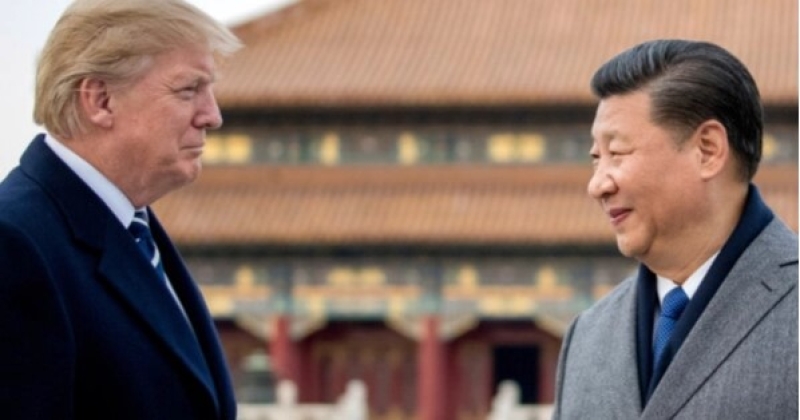
US President Donald Trump and Chinese President Xi Jinping. AL File photo
US President Donald Trump is set to host Chinese President Xi Jinping in Washington this week as tensions between the world’s two largest economies continue to grow over trade, technology and artificial intelligence.
Although neither side is expected to reach a major breakthrough, Trump and Xi are likely to maintain a cordial tone during their third meeting since Trump returned to the White House, seeking to prevent further deterioration in already fragile bilateral relations.
The two countries remain locked in competition over AI and trade while also seeking greater leverage on sensitive geopolitical issues, including Iran and Taiwan.
“The fact that they are meeting, and there’s dialogue occurring and building that relationship, is probably as important as outcomes from the meeting,” said Sen. Steve Daines, a Montana Republican who advises Trump on China and recently visited the country ahead of the summit.
Cui Tiankai, a former Chinese ambassador to the US, recently said at a Beijing forum that disagreements between the two countries are inevitable but stressed the importance of maintaining overall stability.
Trade tensions have eased, but rivalry remains
Xi’s visit to Washington, beginning Wednesday, will be his first in a decade. The meeting comes after Washington and Beijing stepped back from last year’s intense trade confrontation, when both sides imposed extremely high tariffs that threatened to disrupt the global economy.
China also restricted exports of critical minerals that are essential to products ranging from electric vehicles to military aircraft.
For Washington, the challenge extends beyond trade. The US is seeking to preserve its technological edge as part of efforts to maintain national security and its global position. China, meanwhile, has expanded its economic, technological and military capabilities and is working to strengthen its role in the international system.
Evan Medeiros, a senior adviser at The Asia Group, said the stability sought by both governments is driven by their intense strategic competition.
Da Wei, director of the Center for International Security and Strategy at Tsinghua University, said the two countries appeared to be moving toward a “new normal” of broader stability despite measures such as blacklisting companies and restricting high-tech trade.
He said the two leaders now need to produce agreements that can be implemented quickly by their respective governments.
AI emerges as a major area of rivalry
Artificial intelligence has become one of the most important areas of competition between Washington and Beijing, with neither side showing much willingness to slow technological development despite concerns from technology executives about the potential dangers of advanced AI.
“Whoever wins AI wins,” Trump has repeatedly said.
On Monday, Trump said on social media that the US remained ahead of China in AI and argued against restricting the technology, comparing its potential impact to that of the Industrial Revolution and the internet.
China is equally determined to remain competitive. Chen Yixin, head of China’s Ministry of State Security, recently warned that advanced AI capabilities in the hands of foreign or hostile forces could pose a direct threat to the ruling Communist Party.
The US has imposed restrictions on exports of advanced AI chips to China and accused Chinese developers of extensively using American AI models to reproduce their capabilities.
Beijing has defended the practice, known as distillation, saying it is common throughout the industry, including among US companies. Chinese officials have also accused Washington of seeking to dominate the AI sector.
China is additionally concerned about US efforts to establish international AI partnerships that exclude Beijing. In response, it has been seeking support from developing countries for broader global rules governing AI.
Despite the rivalry, Washington and Beijing are exploring limited cooperation.
US Treasury Secretary Scott Bessent said Sunday, following talks with Chinese Vice Premier He Lifeng in New York, that Washington had proposed a system for notifying each other about AI-related incidents that could pose national security risks.
Bessent said greater transparency between the world’s two leading AI powers would be important.
Targeted economic measures replace broad tariff escalation
Although both governments have avoided broad new punitive measures that could undermine their trade truce, they continue to target specific companies and products.
Mira Rapp-Hooper, a visiting fellow at the Brookings Institution’s Center for Asia Policy Studies, said both countries appeared to be testing the limits of competition while trying to keep relations between their leaders on a more stable track.
Washington has recently taken action against Chinese telecommunications and surveillance equipment, companies accused of using forced labor in Xinjiang, and Chinese robotics and drone manufacturers. - AP