

- Dhaka’s air quality moderate on Sunday morning |
- Special prayer held at DU on 45th death anniv of Ziaur Rahman |
- 55-year-old dies in Chuadanga as fibrous mango bit blocks throat |
- Dhaka's air quality ‘moderate’ during Eid holiday |
- Thousands of tourists flock to Kuakata during Eid festival |
DRC Reforests Former Camps of War-Displaced Communities
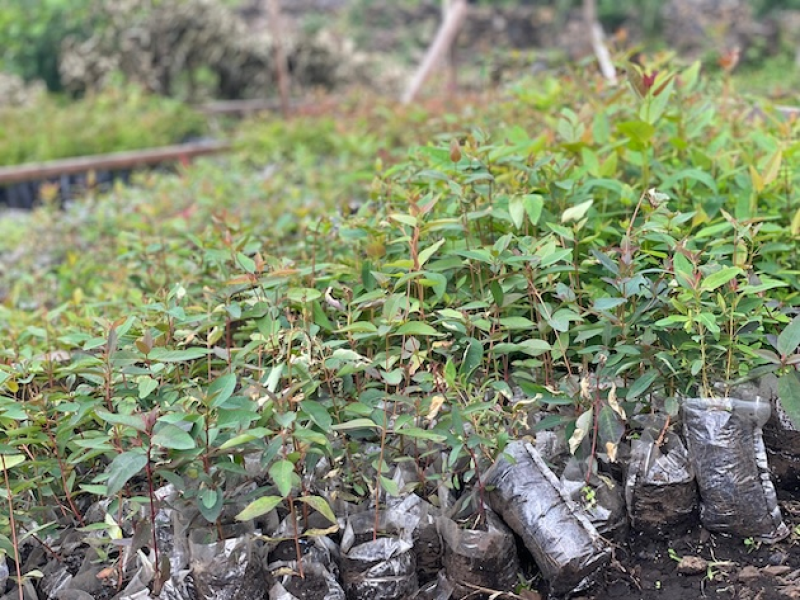
A nongovernmental organization is trying to reforest areas once deforested due to displacement in the DRC.
The Youth Circle for Nature Conservation and Community Development is leading efforts to reforest sites once inhabited by displaced people near the town of Goma.
The organisation aims to restore all areas deforested by war-displaced people around Goma. Most of these areas were once wooded before the M23 conflict began in late 2021.
When the wave of displaced people swept into the capital of North Kivu, these areas were cleared for makeshift shelters and firewood.
“We see reforestation as a practical way of combating global warming, preventing soil degradation, and restoring biodiversity,” said Gloire Mbusa, programme manager at the Youth Circle.
He added that the organisation has already planted trees on more than 13 hectares at the Kanyaruchinya site, north of Goma.
Environmentalists have criticised the ongoing political and security crisis in eastern DRC for its “disastrous consequences” on the environment and urged action.
“We deplore the fact that since the outbreak of the current crisis in the east, protected areas, including parks, have been destroyed. The parties involved in the conflict should recognise that these areas have non-belligerent status,” said Olivier Ndoole Bahemuke, an environmental activist.
He highlighted the Virunga National Park, one of Africa’s oldest, which he described as facing an “existential threat.”
The Institut Congolais pour la Conservation de la Nature, the Congolese state agency for biodiversity management, has identified armed activity, looting, and charcoal production as among the threats to Virunga Park.
The Youth Circle said it seeks to help revive already “fragile” biodiversity by planting trees. “We are considering reforesting other sites, such as the grounds of primary and secondary schools that previously housed displaced people,” Mbusa noted.
John Tsongo, another environmental activist in Goma, welcomed the initiative, saying it would help green the outskirts of North Kivu’s capital.
“There were more than 10 camps for displaced people around Goma, and these camps had lost all vegetation. Replanting trees is a truly commendable initiative. It will play an important role in regulating the province’s climate. Such efforts should also be extended into the city of Goma itself,” he said.
He urged authorities and stakeholders to raise awareness so that every resident plants at least one tree. “We can, for example, encourage people to plant trees along Goma’s main roads and within each plot of land, and ensure residents monitor their growth. Too many past projects failed because of lack of follow-up,” he warned.
The Democratic Republic of Congo remains one of the world’s forest-rich countries. However, both small- and large-scale deforestation threaten its vast forests, undermining its role as a “solution country” to climate change, as its leaders have often claimed.