

- Trade, Energy, Economic Coop, Rohingyas to Feature Dhaka-Tokyo Talks |
- Dhaka Ranks 6th Among World’s Most Polluted Cities Today |
- Bangladeshis Spend Tk 9.87 Billion Abroad Using Cards |
- UNICEF Chief Urges Bangladesh to End Child Marriage |
- Oil Prices Hit $110 as Middle East Tensions Escalate |
Govt vows inclusive, just new Bangladesh: Adviser Titumir
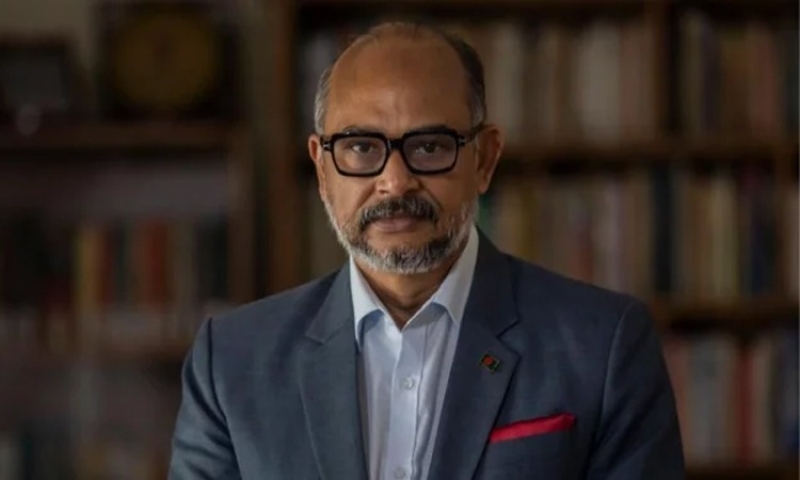
Adviser to the Prime Minister on the ministries of Finance and Planning Dr Rashid Al Mahmud Titumir. File Photo
Finance and Planning Adviser Dr Rashid Al Mahmud Titumir has said the government is committed to building a new Bangladesh on the foundations of democracy, social justice, human dignity and inclusive economic transformation, with participation from all regions and communities.
Speaking as chief guest at a “pre-budget shadow parliament” discussion on tackling inflation held at the Bangladesh Film Development Corporation (BFDC) in Dhaka, he said development must reach every citizen, regardless of class, gender or geography.
“We want to build a democratic, humane and welfare-oriented Bangladesh based on equality, dignity and social justice,” he said. “This new Bangladesh will stand in the global arena through the collective strength of people from the plains, hills, women, men, youth, the elderly and persons with disabilities.”
Presided over by Debate for Democracy Chairman Hasan Ahmed Chowdhury Kiron, the programme focused on inflation and upcoming budget priorities.
Titumir said the country inherited a “fragile economy” that has placed pressure on households, businesses and the state. He noted that many lower-middle-income families had slipped into poverty in recent years, while social and economic stress has deepened.
He identified the low tax-to-GDP ratio, below 7 percent, as a major barrier to sustainable progress.
“A country cannot move forward with confidence when its revenue base is so weak,” he said.
The adviser said inflation is largely structural in nature, pointing to market concentration and what he described as oligopolistic control in key sectors.
“A small number of groups influence prices in essential markets. This has increased inequality and hardship for ordinary people,” he said, adding that greater economic participation and transparency are needed.
He also referred to issues in sectors such as power and LPG, saying weak competition and patronage-based systems had contributed to price pressures.
On employment, Titumir said job creation for young people is the government’s top priority, stressing that investment must rise to generate sustainable opportunities.
“A young person must see a future ahead. Employment is central to restoring confidence and stability,” he said.
He outlined plans for balanced regional development, including agricultural modernisation, revitalisation of wetlands and haor areas, restoration of canals, and major water management initiatives aimed at addressing irrigation and climate-related challenges.
The adviser also emphasised women’s empowerment, rural entrepreneurship and small industries under initiatives such as “One Village, One Product.”
“Women’s advancement is a key driver of social progress,” he said.
Highlighting climate concerns, he said the government is working towards reducing fossil fuel dependence and promoting green development to ensure long-term sustainability.
Criticising what he called mismanagement and unplanned infrastructure under previous administrations, he said future development must be people-centred and service-oriented.
Titumir also announced that Bangladesh Bureau of Statistics (BBS) data would be made more openly accessible to strengthen transparency and evidence-based policymaking.