

- Dhaka Ranks 6th Among World’s Most Polluted Cities Today |
- Bangladeshis Spend Tk 9.87 Billion Abroad Using Cards |
- UNICEF Chief Urges Bangladesh to End Child Marriage |
- Oil Prices Hit $110 as Middle East Tensions Escalate |
- Two parties join hands to create unrest in country: PM |
Child Survival Improves but Nutrition Risks Persist
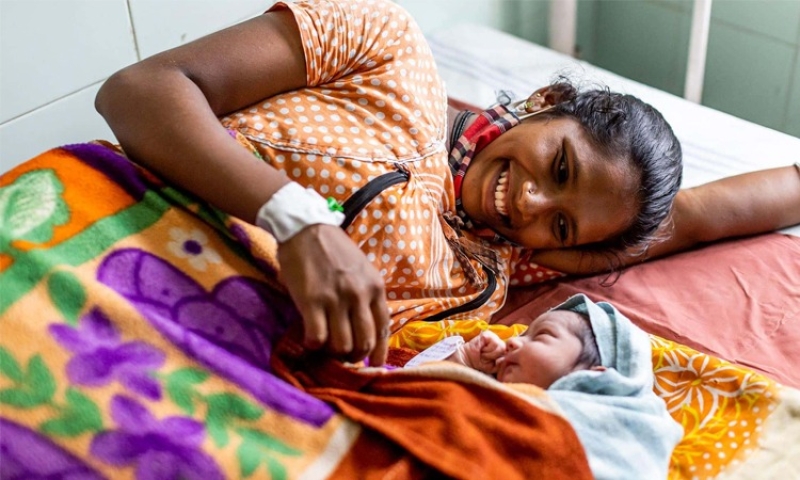
Photo: UNICEF
The latest Bangladesh Multiple Indicator Cluster Survey (MICS 2025 Bangladesh) has revealed a mixed picture of progress and emerging challenges for women and children, showing improvements in child survival and maternal healthcare alongside rising malnutrition, environmental risks and weakening social protection.
The survey, conducted by the Bangladesh Bureau of Statistics in partnership with UNICEF, offers what UNICEF described as a “mirror” of the realities faced by children and families across the country.
UNICEF Representative to Bangladesh Rana Flowers said the findings go beyond numbers, reflecting the lived experiences of communities nationwide.
Gains in child and maternal health
The report shows continued progress in child survival. Under-five mortality has declined to 33 deaths per 1,000 live births, down from 40 in 2019.
However, neonatal deaths remain a major concern, with around three-quarters of infant deaths occurring within the first month of life.
Maternal healthcare indicators have also improved. About 89.7% of women now receive at least one antenatal care visit from skilled providers, while 71% of births take place in health facilities.
At the same time, the report flags concerns over rising medical intervention during childbirth. The national caesarean section rate has increased to 51.8%, reaching 56% in urban areas, which the report warns may place unnecessary financial and health system pressures on families.
Nutrition challenges worsening
Child nutrition remains a key concern despite some gains. Stunting has continued to decline and now stands at 24%, but wasting has increased significantly, rising from 9.8% in 2019 to 12.9% in 2025.
The report links this rise to food price shocks and seasonal vulnerabilities.
Only 30% of children aged 6–23 months receive a minimum acceptable diet, highlighting gaps in dietary diversity and awareness even among relatively well-off households.
Environmental health risks
For the first time, MICS included national biomarker data on lead exposure, identifying it as a serious public health issue.
The survey found that 38.3% of children aged 12–59 months and 7.5% of pregnant women have elevated blood lead levels. It also noted a strong overlap between lead exposure and anaemia, which affects 43.9% of children and 53.1% of pregnant women.
Although access to basic drinking water is nearly universal at 98.6%, safety remains a concern. E. coli contamination was detected in 47.1% of source water and 84.9% of stored household water.
Handwashing facilities with soap and water have also declined to 68.6% compared to 2019 levels.
Child protection and social safety concerns
The report highlights mixed trends in child protection. Child marriage among women aged 20–24 has slightly declined to 47.2%, but the share of currently married adolescent girls aged 15–19 has risen to 38.9%.
Child labour has also increased, affecting 9.2% of children aged 5–17 years.
One of the most concerning findings is the sharp decline in social protection coverage. The share of households receiving social transfers has fallen from 58.1% in 2019 to 34.4% in 2025.
The report warns that this reduction weakens a key buffer against economic shocks, increasing risks for child nutrition, education and wellbeing.
Call for urgent action
The findings urge stronger child-focused social protection, safer childbirth practices, and integrated responses to lead exposure, nutrition and anaemia.
UNICEF’s Rana Flowers stressed that data must be translated into action, calling for evidence-based policies to protect children and families more effectively.